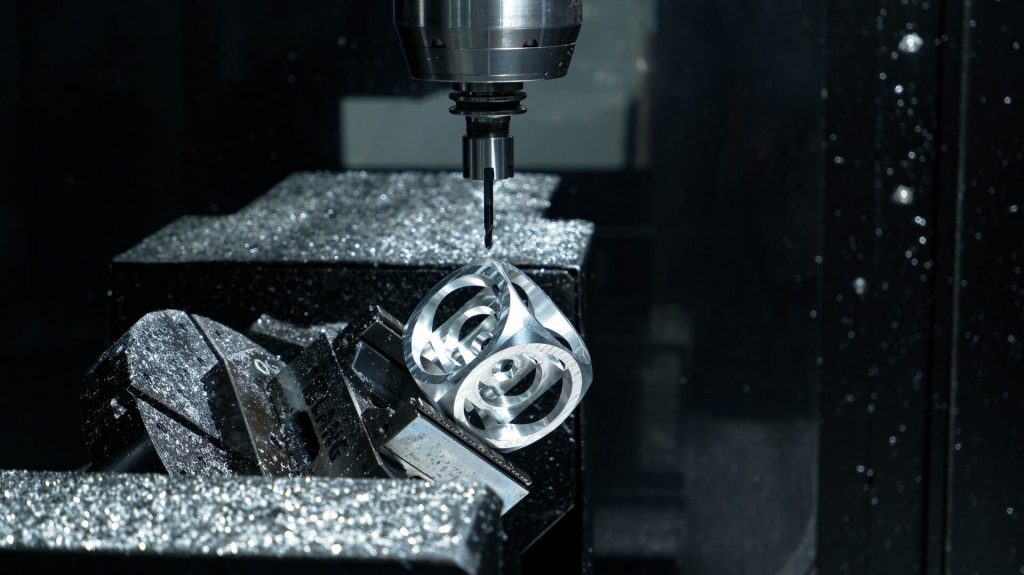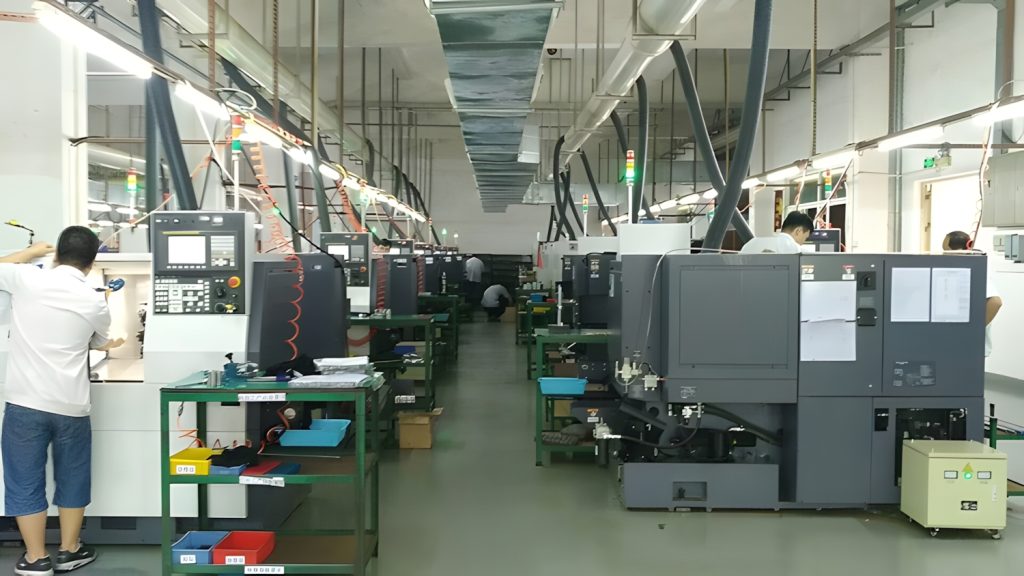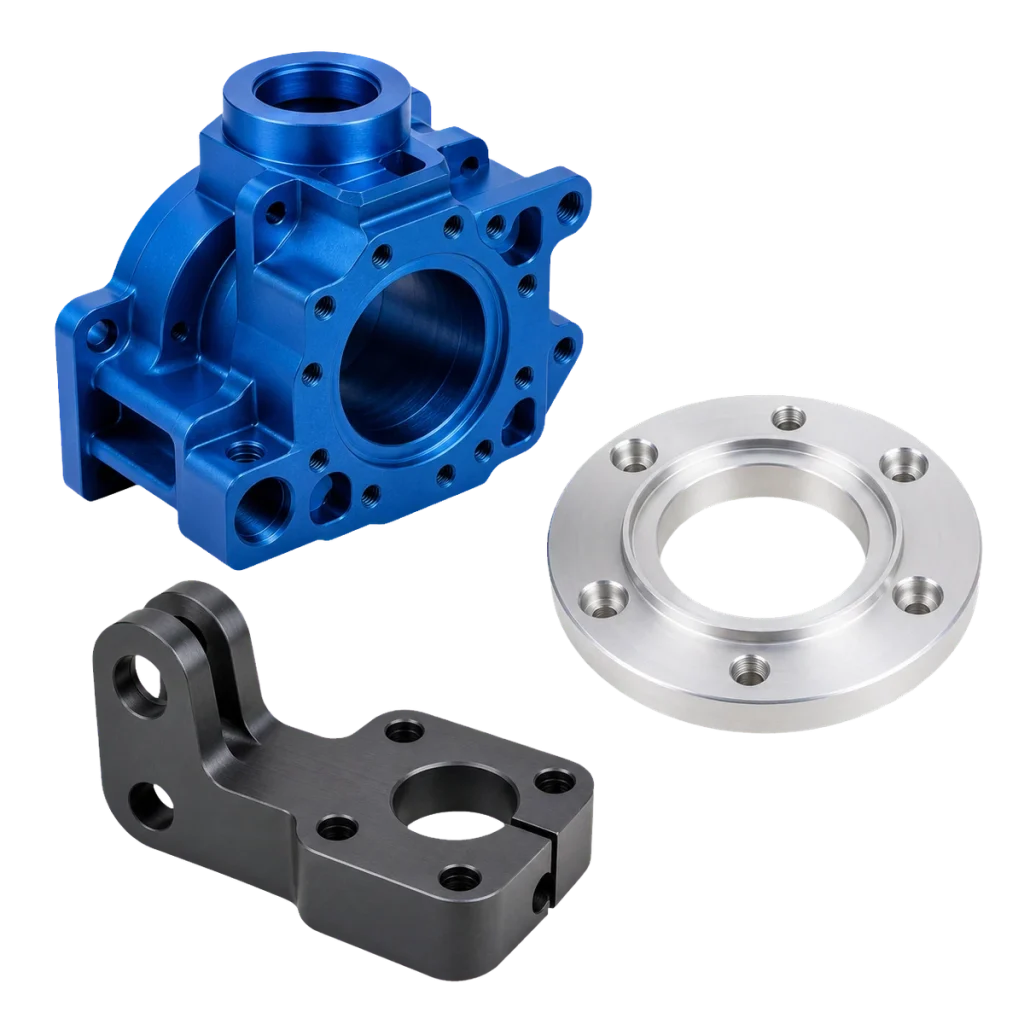
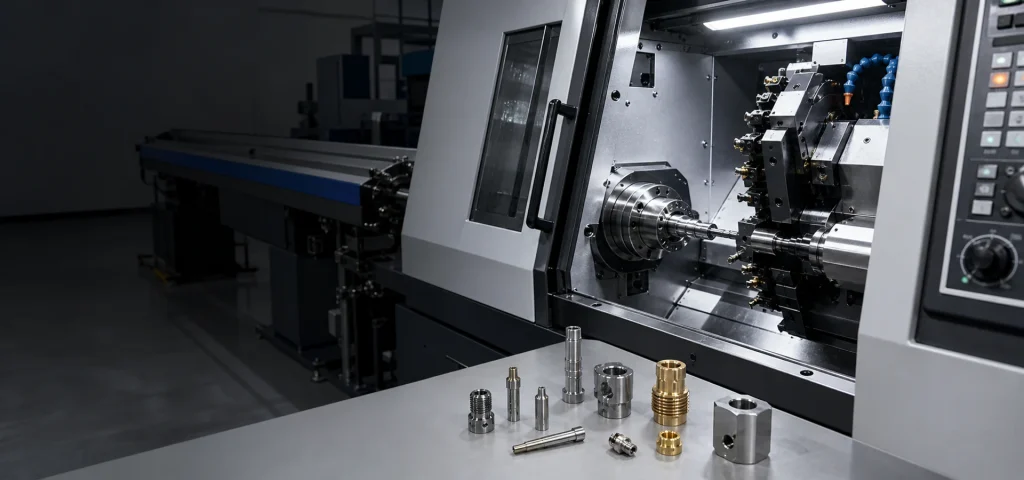
When to use Swiss machining is a bar-and-bushing decision for small parts, not a quality slogan. Choose Swiss when the stock is small-diameter bar, the cut must stay next to a guide bushing, and front and back features (threads, grooves, cross-holes) should finish in one cycle. Typical candidates are pins, connectors, fittings, and miniature hardware in 303, 304, 316L, 17-4 PH, 6061-T6, or C360. ASME Y14.5-2018 datums still belong on the diameters that locate. ISO 2768-1 (1989) can cover loose sizes. Skip Swiss when the OD is a chuck lathe diameter, the blank is sawn, or the mill body is the real job.
You are screening a small metal or plastic component before you send an RFQ to a Dongguan factory. This page is the yes/no gate for Swiss-type (sliding headstock) work. It is not a custom-shaft comparison against a chuck lathe, and it is not a mill-turn tutorial.
Have diameter, length, both-end features, and quantity in view. Swiss is a cell you pick from those four, then you send STEP and PDF.
Key takeaways
- Swiss is for small bar that needs support at the cut, plus both-end work in one cycle.
- A chuck lathe remains the cell for large ODs, flanges, and sawn blanks.
- Repeat quantity makes the Swiss cycle pay off. It does not create the need for a bushing.
- Fine threads and tiny grooves want stable stock, not a longer unsupported stick-out.
- If the part is mostly a milled body, do not force it onto a sliding headstock.
When to use Swiss machining: the screening table
When to use Swiss machining should be obvious from diameter, support, features, and lot plan.
| Factor | Use Swiss | Stay off Swiss | Best for | Watch-out |
|---|---|---|---|---|
| Diameter | Small bar that fits a guide bushing | Large OD, flanges, or a blank | Pins, screws, tiny fittings | Forcing a 50 mm head into Swiss |
| Support | Cut stays next to the bushing | Short, stiff stick-out from a collet is enough | Slender geometry | High L/D on a large bar is still a chuck problem |
| Features | Both ends, fine threads, cross-holes in one cycle | One simple OD from a gripped shoulder | Connectors and instrument hardware | A single groove on a fat bushing |
| Quantity | Repeat bar-fed lots after approval | One odd blank that will never repeat | Production pins and fittings | Swiss setup for a single bulky prototype |
| Stock | Drawn bar with controlled diameter | Plate, casting, or a saw-cut cube | Bar-fed metals and some plastics | Bushing performance follows bar consistency |
| Runout | Both-end journals without a reclamp | One-end work on a stiff chucked OD | Coaxial small shafts | 0.02 mm runout on a flange is still chuck work |
Bottom line: use Swiss when the part is small bar, slender, and both-end complete; use another cell when the part is large, blank-based, or mill-dominated.
If the screen says yes, open Swiss CNC machining. If it says no because the part is a conventional turned body, open CNC turning.
Live tools on Swiss are still Swiss. They are not a reason to send the same pin to a mill vise.
Geometry and features that fit a sliding headstock
Geometry and features that fit a sliding headstock are small diameters, short unsupported cutting, and work on both ends.
The headstock feeds bar through the bushing. Tools cut next to that support. A sub-spindle can take the cutoff end and finish the back: a thread, a bore, a groove, a small hex. That is why Swiss shows up on connector bodies, shoulder pins, standoffs, and miniature fittings.
Call standard thread series and class. Call groove width the insert can actually cut. Sharp internal corners still need a tool radius. ASME Y14.5-2018 is how you lock those small diameters to a datum (ASME Y14.5).
Do not claim a special implant route on the RFQ unless you have already asked the shop whether they support that product type.
L/D is the geometry reason the bushing exists. A Ø5 mm × 45 mm pin is 9:1 in a chuck and routine in Swiss. The same length on Ø20 mm is only 2.25:1 and does not need a sliding headstock. Compute finished thin-span L/D. If it is high and the bar is small, Swiss is in play. If it is high and the bar is large, you want a tailstock or rest on a chuck lathe.
Cross-holes, wrench flats, and tiny hexes are live-tool work inside Swiss. They are not a mill-family part. A Ø2.5 mm hole through an Ø8 mm bar belongs on a driven drill while the bushing supports the cut. Taking that pin to a mill after turning is how you bend it and lose runout.
Deep pockets, large faces, and prismatic bodies still belong on a mill. CNC milling services is the page for those. A small round boss on a cube does not make the cube Swiss.
Materials and stock that belong in the Swiss conversation
Materials and stock that belong in the Swiss conversation are bar forms the bushing can hold consistently.
303 and 416 stainless often cut cleanly. 304 and 316L are common and need chip control. 17-4 PH and 4140 show up when strength is the point. 6061-T6 and C360 are frequent for lightweight or electrical hardware. PEEK, acetal, and nylon can be Swiss candidates when the drawing is small and the plastic is stable enough to hold.
Write the grade and temper. Write if the bar must be ground for the bushing. ISO 2768-1 (1989) can sit on unspecified lengths (ISO 2768-1). Tiny press-fit diameters still need real limits.
On small Swiss work, say whether you will accept optical measurement, gauges, or CMM on which balloons. NIST manufacturing pages, including 2024 metrology publications, treat that choice as part of making the part.
Bar diameter is the purchasing call. The largest finished OD plus turning stock and cutoff has to be a real bar. Ø7.8 mm finished usually wants Ø8 mm bar. Ø11.5 mm finished wants a standard Ø12 mm. If you already stock Ø10 mm 316L, say so. If the largest step is Ø22 mm, you are probably off Swiss.
Chip control follows grade more than it follows the machine name. 303 and C360 often break chips. 304 and 316L can bird-nest in a bushing if feeds and tools are wrong. That is a process detail, not a reason to move a slender pin onto a chuck where L/D will chatter. Ask for a first-article chip and surface review on gummy stainless. Do not change cells to avoid chips.
Straightness and diameter tolerance of the bar show up as bushing play. Play shows up as OD variation and runout. If the journals are h6 and runout is 0.02 mm, the shop may want ground bar. If the part is a non-critical pin, drawn bar may be enough. Do not specify ground bar as a slogan. Specify it when the bushing and the fit need it.
The Aluminum Association lists 6061 designations used on mill certs (alloy information on aluminum.org as of 2024) (Aluminum Association). 6061-T6 Swiss bar is common. It still needs a real fit class on locating diameters. For aluminum grade notes next to the RFQ, keep aluminum CNC machining in the project links.
L/D, bar diameter, and runout on Swiss parts
L/D, bar diameter, and runout on Swiss parts are the three checks that confirm when to use Swiss machining after the part already looks small.
L/D: finished unsupported length over thin diameter. Swiss keeps that unsupported length short because the bushing sits next to the tool. A chuck lathe fights the same ratio with a tailstock, a rest, or chatter. If L/D is mild (about 3:1 or less) and the OD is collet-friendly, Swiss is optional. If L/D is high and diameter is small, Swiss is the support method.
Bar diameter: hard stop. Sliding-headstock machines have a bar envelope. A flange or head larger than that envelope is a chuck job even if the stem looks like a pin. Do not Swiss the stem and ignore the head. Write largest OD on the RFQ.
Runout: Swiss earns its keep by not reclamping. Both-end journals, both-end threads, a back groove, and 0.02 mm circular runout to datum A are a Swiss inspection story. Prefer runout or position under ASME Y14.5-2018. “Concentric” is not a method. Indicator work on small pins may need a dedicated bench or optical help. Name the method.
Live-tool versus mill split on these parts: keep holes and flats on the Swiss turret. A mill vise on a Ø6 mm pin will move the axis you just protected. Split to a mill only if the mill volume is a real mill body, which usually means you already failed the Swiss screen.
If coating applies after Swiss, state whether sizes and runout are before or after. Small diameters feel plating and anodize quickly. Mask notes belong on the PDF.
A numeric example helps. Ø6.00 mm h6 journal, 48 mm long, M5 both ends, circular runout 0.02 mm, bar Ø8 mm 303. L/D in a chuck is 8:1 on the finished journal and worse in the rough. Swiss keeps the cut next to the bushing, then the sub-spindle finishes the back thread so you never flip the pin in soft jaws. Put datum A on the h6 journal. Do not datum the thread major. If you add a Ø2 mm hole, keep it as a driven tool on the same cycle. A mill vise after cutoff will oval the h6 and the runout balloon will fail for a fixture reason, not a turning reason.
When to use Swiss machining versus a chuck lathe or live-tool mill-turn
When to use Swiss machining versus leaving the job on a chuck lathe is a gate, not a shaft-by-shaft bake-off.
Stay on a chuck lathe when the OD is large, a flange needs a hard grip, or the blank is sawn. Stay on a mill when the body is prismatic.
Use Swiss when all of this is true: small bar, support needed at the cut, both-end or high-detail features, and a lot that can run from bar. If only quantity is high but the part is a 60 mm bushing, Swiss is the wrong cell.
Live-tool mill-turn on a chuck is the other mix-up. Live tools add flats and holes. They do not add a guide bushing. An Ø24 mm 4140 shaft with a keyway is chuck mill-turn. An Ø8 mm 303 shaft with a cross-hole is Swiss with driven tools. Same feature family, different L/D and bar diameter.
- Confirm the largest finished diameter is still a bar-and-bushing size.
- Confirm both-end features or slender geometry actually need support at the cut.
- Confirm stock is bar, not a sawn blank.
- Name material, quantity, finish, thread class, and inspection method on the PDF.
- State whether a cutoff pip is allowed. You are done when the shop can pick a bar size without a second email.
- If mill features are turret-sized, keep them on Swiss live tools. If they are pockets, you already left Swiss.
For mixed prototype-to-bar-feed plans, small batch CNC machining can cover the first articles. The Swiss screen still has to pass on geometry. Custom CNC machining services can carry mixed cells on one PO if each line names Swiss or chuck.
Worked RFQ: three screens, one decision each
A worked RFQ makes the gate concrete. Same buyer, three parts, three answers.
Part 1, Swiss yes. Ø8 mm 303 bar, finished pin Ø6.8 mm × 58 mm, M4 × 0.7-6g both ends, 1.1 mm groove, Ø2.2 mm cross-hole, circular runout 0.02 mm on the OD to datum A (major OD). L/D in a chuck would be about 8.5:1. Qty 200 after 10 first articles. Bar: Ø8 mm, shop to confirm drawn versus ground. Cutoff pip not allowed. Route: Swiss, live-tool hole, sub-spindle back thread. Cover note: “Swiss. Not chuck. Not mill vise. Indicator or optical runout as quoted.”
Part 2, Swiss no, chuck mill-turn. 4140 shaft, flange Ø48 mm, body Ø22 mm, length 95 mm, 6 mm keyway, runout 0.03 mm on journals. L/D mild with a tailstock. Qty 15. Route: chuck turning, live-tool keyway. The flange will not go through a typical bushing. Quantity 15 does not create a Swiss need.
Part 3, Swiss no, mill primary. 6061-T6 block 40 × 28 × 12 mm with pockets and one Ø8 mm boss. The boss looks Swiss-sized. The body is a mill job. Quote CNC milling. Do not bar-feed a cube.
You are done when each line item has a yes/no Swiss flag, a bar or blank size, an L/D note if round, and a runout method if journals must run true.
Do not merge the three parts into one “small metal parts” RFQ without cell names. The programmer, bar feeder, and fixture are different.
FAQ
When to use Swiss machining instead of a standard CNC lathe?
Use Swiss when the part is small-diameter bar that needs guide-bushing support and both-end features in one cycle. Use a standard lathe when the part is larger, flanged, or blank-based. Check largest OD against a bushing envelope, then check L/D on the thin span. High L/D on Ø8 mm bar is Swiss. High L/D on Ø32 mm bar is chuck plus tailstock or rest. Live tools can exist on both cells. They do not pick the cell.
Is Swiss only for high volume?
No. Volume helps the bar process pay for itself. Geometry creates the need. A small slender first article can still be Swiss. A thousand Ø50 mm bushings are still chuck work. If you have 10 pieces of Ø6 mm 316L with both-end threads, quote Swiss and say it is a first article before a later lot. Setup time is real. The bushing is still the right support.
What diameter range is typical for Swiss?
Shops pick Swiss for small and medium bar, not for large chucked ODs. Send the finished largest diameter and let the shop confirm a bushing and bar size. Do not treat a catalog “Swiss diameter” as a YXT machine list. The RFQ fact is your largest OD plus stock for cutoff. If that number looks like chuck bar, it is chuck bar.
Can Swiss make cross-holes and hexes?
Often yes, with driven tools and a sub-spindle, when those features fit the tool envelope. Large mill pockets still belong on a mill. A Ø2 mm hole and a 5 mm hex on a pin are Swiss live-tool work. A 20 mm-deep pocket is not. Putting that pocket on a sliding headstock is how you clog a Swiss cell. Split only when the mill work is a mill job, which usually means the part failed the Swiss screen already.
Do I need special bar for Swiss?
You need bar the bushing can run. Diameter, straightness, and sometimes a ground bar spec matter. If you require a special bar, write it. Inconsistent drawn bar shows up as diameter and runout variation. For loose pins, standard drawn bar is often enough. For h6 journals and 0.02 mm runout, expect the shop to ask for better bar. Chuck jobs care about bar as grip stock, not as a bushing fit.
Is Swiss a good default for every pin?
No. A short, stiff pin with one simple OD may be faster on a collet lathe. Swiss earns its keep when the pin is slender, detailed, or both-end complete. Ø8 mm × 12 mm with one chamfer is a collet job. Ø8 mm × 60 mm with two threads and a hole is a Swiss job. Measure L/D before you default.
What files should I send for a Swiss quote?
STEP, PDF, material, quantity, finish, and the critical diameters. Add thread class, inspection method, bar size or shop-select from largest OD, whether a cutoff pip is allowed, and runout method if journals must run true. Same pack discipline as any turning RFQ. The bushing does not read a screenshot. If L/D is high, say whether a pip, a center, or neither is allowed. If live tools will cut a hole, put position to the journal datum so the Swiss program does not treat the hole as a size-only drill.
If when to use Swiss machining is a yes on small bar, both-end features, and a guide-bushing need, send the STEP, PDF, and lot size through contact us and point the reviewer at Swiss CNC machining. Put L/D, bar diameter, runout method, and live-tool versus mill-vise in the notes. If the screen is a no, keep the job on the chuck-lathe or mill page instead of forcing a sliding headstock.