
Carbon Fiber CNC Machining
Drawing-led routing, drilling and feature machining for cured CFRP plates, tubes, panels and customer-specified composite stock.
Send the laminate specification, 3D model, controlled drawing, quantity, critical datums and edge-quality requirements for process review.
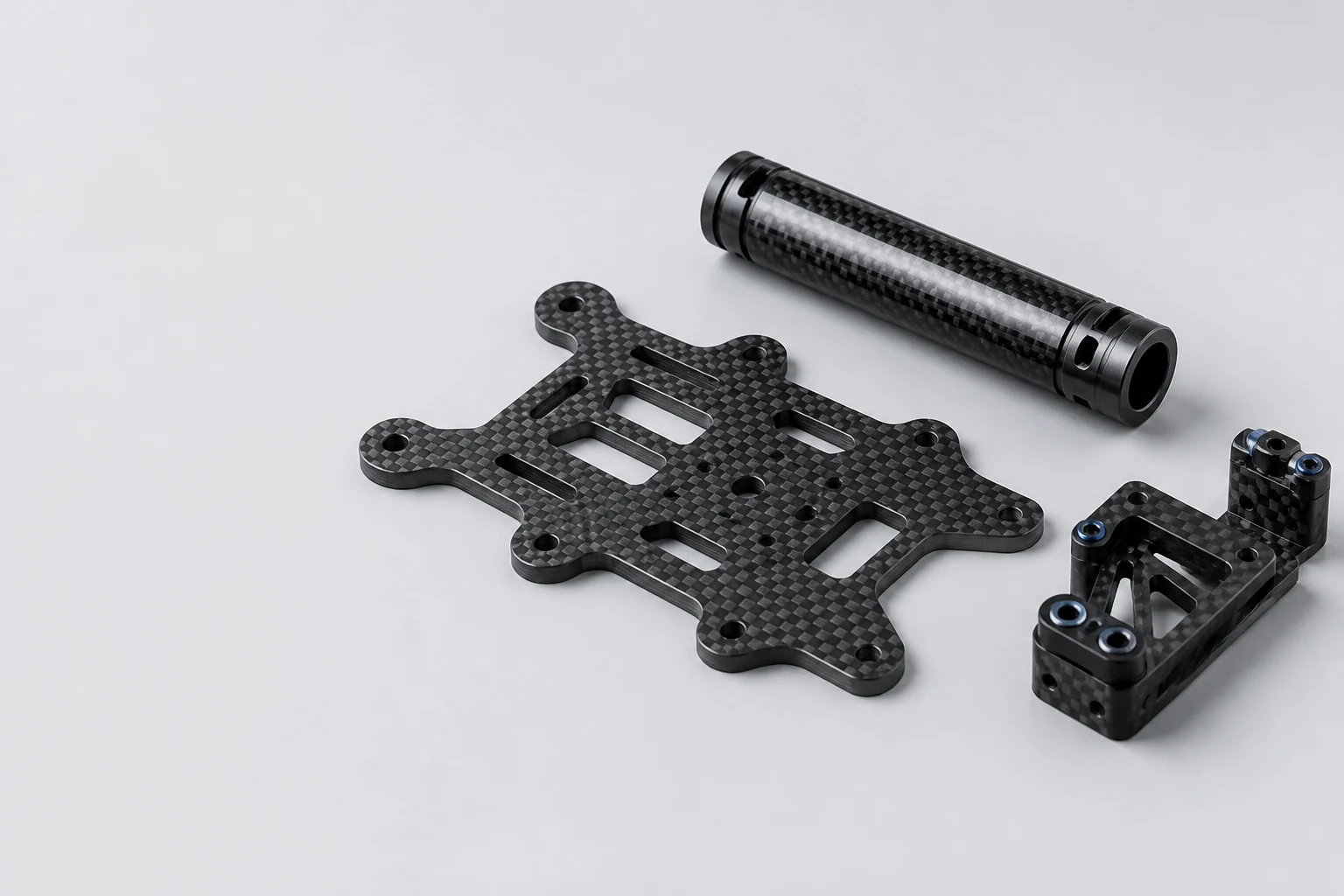
Cured CFRP Stock
Customer-specified plate, tube, panel and supplied composite forms
Routing + Drilling
Feature-specific cutting, support and tool-life strategy
Prototype to Repeat
Drawing-controlled revisions and repeat production batches
Feature-Led QA
Datums, holes, interfaces and visible edge condition
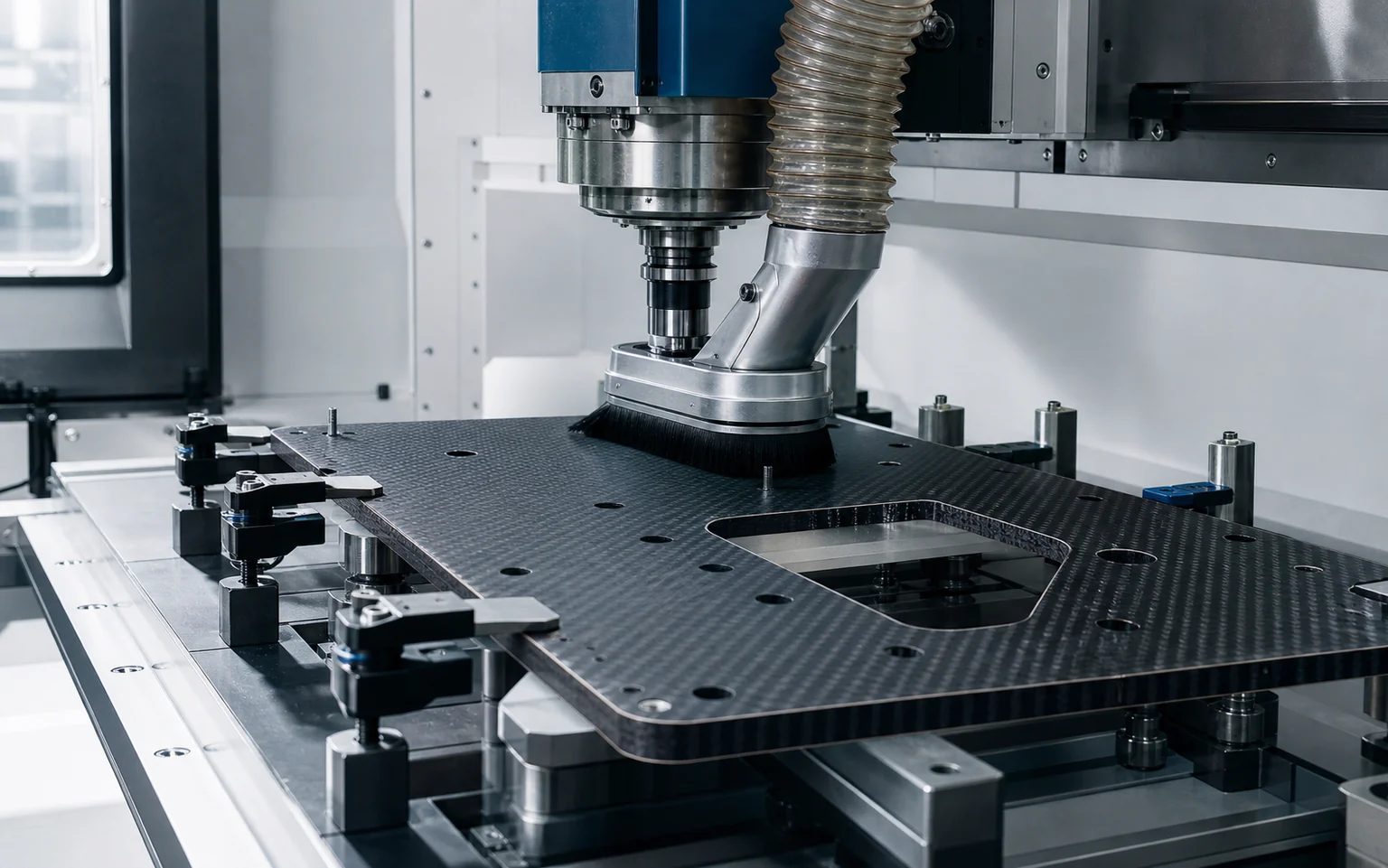
Carbon Fiber Is Not Black Aluminum
CFRP is abrasive, direction-dependent and sensitive to unsupported cutting forces. The process route is built around laminate support, fiber shear, heat control and disciplined dust management.
Support Entry and Exit Faces
Backing, vacuum support or purpose-built fixtures are reviewed to reduce breakout and movement at holes, pockets and external contours.
Shear Fibers Cleanly
Composite-appropriate tool geometry and controlled engagement help limit fraying, pull-out and crushed laminate edges.
Manage Heat and Tool Wear
Cutting data, engagement and tool-life checks are selected to reduce resin smear, local heating and edge deterioration.
Control Conductive Dust
Containment, local extraction and cleanup steps are selected for the material, machine and operation before production is released.
Machining Capabilities Built Around the Feature
Each operation is reviewed against laminate architecture, thickness, edge criteria, datum strategy and downstream assembly requirements.
Contour Routing & Trimming
Profile cured plates and panels with planned lead-in, corner strategy, part support and edge-condition review.
Drilling & Countersinking
Review stack support, entry and exit condition, fastener fit and countersink geometry before the hole pattern is released.
Tube Slotting & End Features
Machine cross holes, slots, end profiles and assembly interfaces in round or rectangular composite tubes.
Interface & Insert Preparation
Prepare controlled pockets, locating features and bonding surfaces for customer-specified bushings, inserts or mechanical interfaces.
Sandwich Panel Features
Route skins and cores with a project-specific plan for support, edge treatment and local reinforcement details.
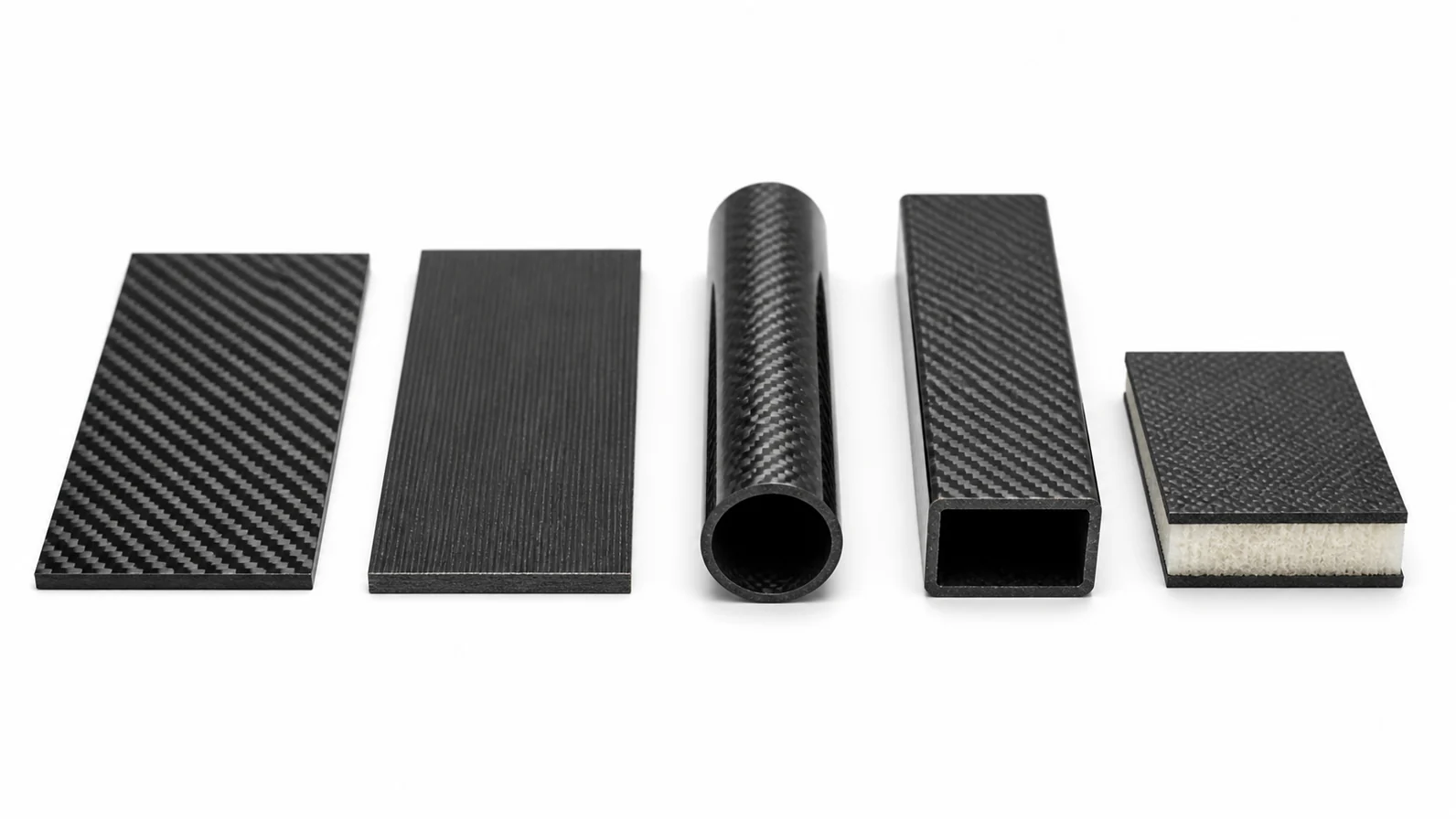
Cured Stock Forms We Can Review
The laminate system is part of the engineering input. YXT does not substitute weave, layup, resin system or core construction without project approval.
Woven CFRP Plate
Common for visible frames, covers and multi-directional panel features. Thickness, weave and cosmetic face should be specified.
Unidirectional Laminate
Best reviewed with fiber orientation, load direction and cut-edge criteria clearly shown on the drawing.
Round Carbon Tube
Suitable for cross holes, slots and end-interface preparation when wall construction and clamping zones are defined.
Rectangular Tube & Profile
Review bend radius, corner layup, wall variation and datum strategy before locating precision features.
Composite Sandwich Panel
Core type, skin thickness, exposed-edge treatment and local reinforcement details must be included in the RFQ.
Stock may be customer-supplied or sourced to the approved specification after review. Laminate manufacture and structural qualification are outside the quoted scope unless explicitly included.
Make Edge Quality a Drawing Requirement
Terms such as clean edge or cosmetic finish should be converted into a reviewable acceptance condition for the actual laminate and feature.
Delamination
Support the laminate near the cut and select entry, exit and drilling sequence around the feature geometry.
Inspect critical hole exits and routed edges against the agreed visual standard.
Fiber Pull-Out
Use sharp composite tooling, controlled engagement and tool-life checks suited to the laminate.
Review visible fraying, loose fibers and edge continuity at functional interfaces.
Heat or Resin Smear
Control rubbing, engagement and evacuation so the tool does not overheat the resin-rich edge.
Check for smeared resin, discoloration and local surface damage where appearance matters.
Hole Exit Damage
Review backing support, hole sequence, countersink geometry and fastener-interface requirements.
Inspect diameter, position, countersink form and exit-face condition as specified.
Dust Contamination
Use process-specific containment, extraction and cleanup before inspection and packing.
Confirm surfaces, cavities and protective packaging are clean to the quoted requirement.
The Drawing Should Describe the Laminate, Not Only the Shape
A complete RFQ lets YXT plan support, cutting direction, inspection and downstream assembly before the first part is machined.
Laminate System and Thickness
State the exact stock specification, resin system if controlled, nominal thickness and whether YXT or the customer supplies the material.
Fiber Orientation and Cosmetic Face
Identify layup direction where functional, plus the visible face, protected face and acceptable weave appearance.
Hole and Countersink Map
Show critical diameters, true position, fastener interfaces, countersinks and whether exit-face condition is controlled.
Datums and Functional Interfaces
Choose datums that can be supported and inspected without distorting thin plates, tubes or sandwich structures.
Edge Acceptance Criteria
Define whether routed edges are functional, cosmetic, sealed, bonded or covered in the final assembly.
Insert, Bonding and Documentation Scope
Include insert specifications, bonding preparation, edge sealing, inspection report and material-document requirements in the RFQ.
Conductive Dust Changes the Machining Route
Containment and extraction are selected around the cured composite, machine, operation and required part cleanliness rather than treated as a final housekeeping step.
Contain
Plan an enclosed or locally controlled cutting zone so chips and fine dust are not allowed to spread through the machine or inspection area.
Extract
Position suitable local extraction close to the cut and select a dry or reviewed alternative route for the specific material and feature.
Clean
Remove residue from surfaces, pockets, fixtures and machine interfaces before the part moves to measurement or assembly preparation.
Confirm
Check the quoted cleanliness and visual requirements before protective packing, especially around holes, cavities and insert interfaces.
The exact dust-control method is confirmed during process review. YXT does not publish a universal capture percentage or use one method for every composite system.
Where Precision Features Meet Lightweight Structures
Typical applications are reviewed by geometry, laminate system, load path, assembly interface and documentation scope.

UAV Frames and Structural Plates
Routed center plates, arms, equipment decks and tube interfaces for commercial or industrial unmanned systems. Images illustrate application context and do not identify a YXT customer.

Payload and Instrument Structures
Lightweight plates, brackets and tube assemblies used around cameras, sensors, communication payloads and positioning hardware.
Robotics and End Effectors
Low-mass mounting plates, wrist structures and interface brackets where reduced moving weight supports system response.
Automation Fixtures
Inspection nests, transfer plates and lightweight tooling structures designed around repeatable datums and protected edges.
Optical and Measurement Frames
Panels and mounting interfaces where controlled hole position, stiffness and low structural mass matter to assembly.
Motorsport and Performance Hardware
Brackets, duct panels, covers and lightweight interfaces reviewed against heat, edge and fastener requirements.
Inspection Follows the Datum and Edge Strategy
Dimensional checks and visual edge acceptance are planned together so flexible stock, cosmetic faces and critical interfaces are handled consistently.
Confirm Incoming Stock
Record the approved material description, form, thickness and supplied documentation before machining begins.
Establish Supported Datums
Fixture and measure the part from the drawing-defined datum structure without forcing thin or flexible features into position.
Check Tools and First Features
Review tool condition, routed edge quality and critical hole results early enough to adjust the process before the batch continues.
Complete Dimensional and Visual Review
Inspect the agreed dimensions, positions, interfaces and edge criteria using the quoted report scope.
Clean and Protect for Delivery
Remove residue, protect cosmetic surfaces and pack thin plates or tubes to reduce handling damage in transit.
Machined Carbon Fiber Component Examples
Original YXT page visuals show representative part families. Final geometry, laminate and acceptance criteria are always drawing-specific.
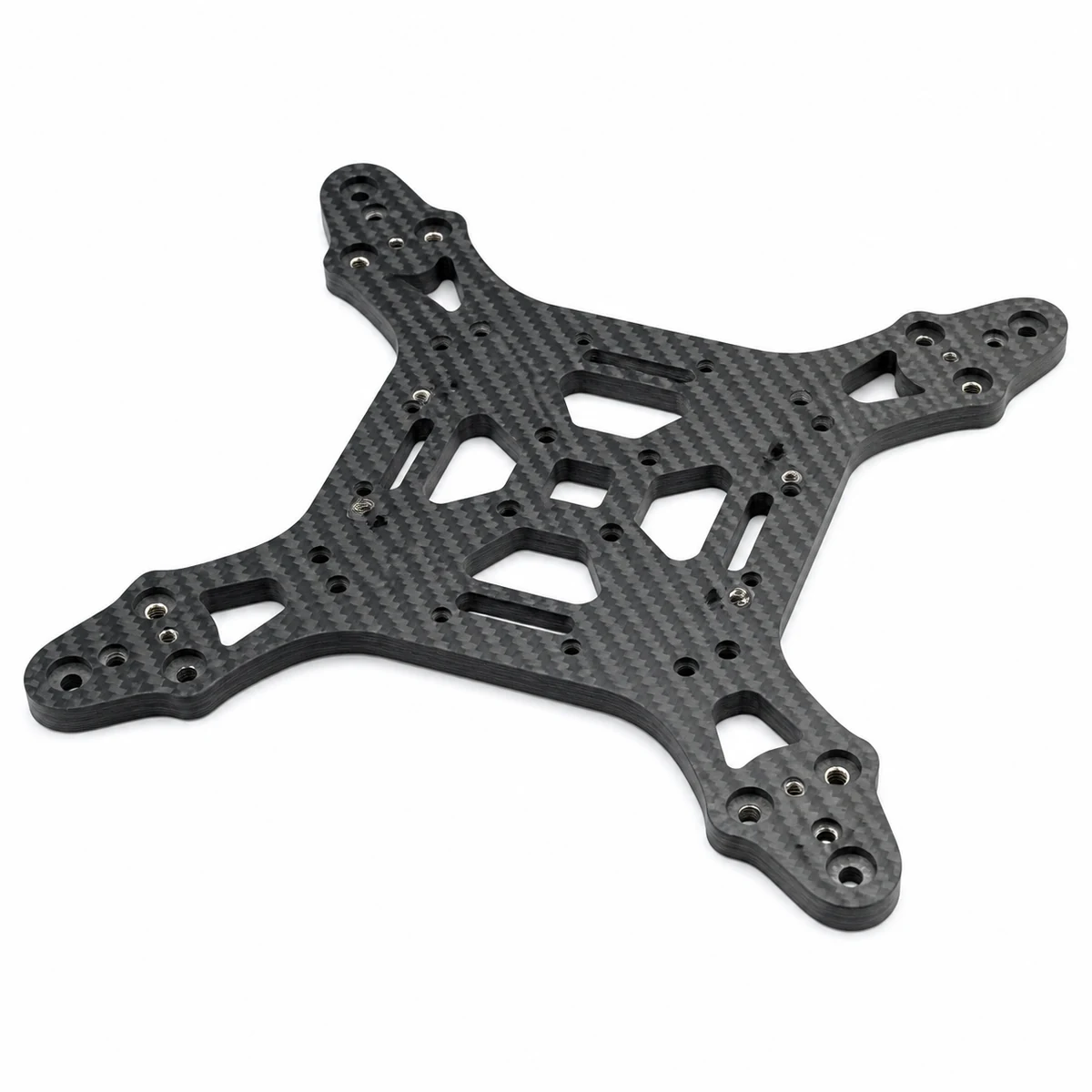
Routed Center Plate
Contour routing, pockets, countersinks and multi-hole patterns in cured laminate plate.
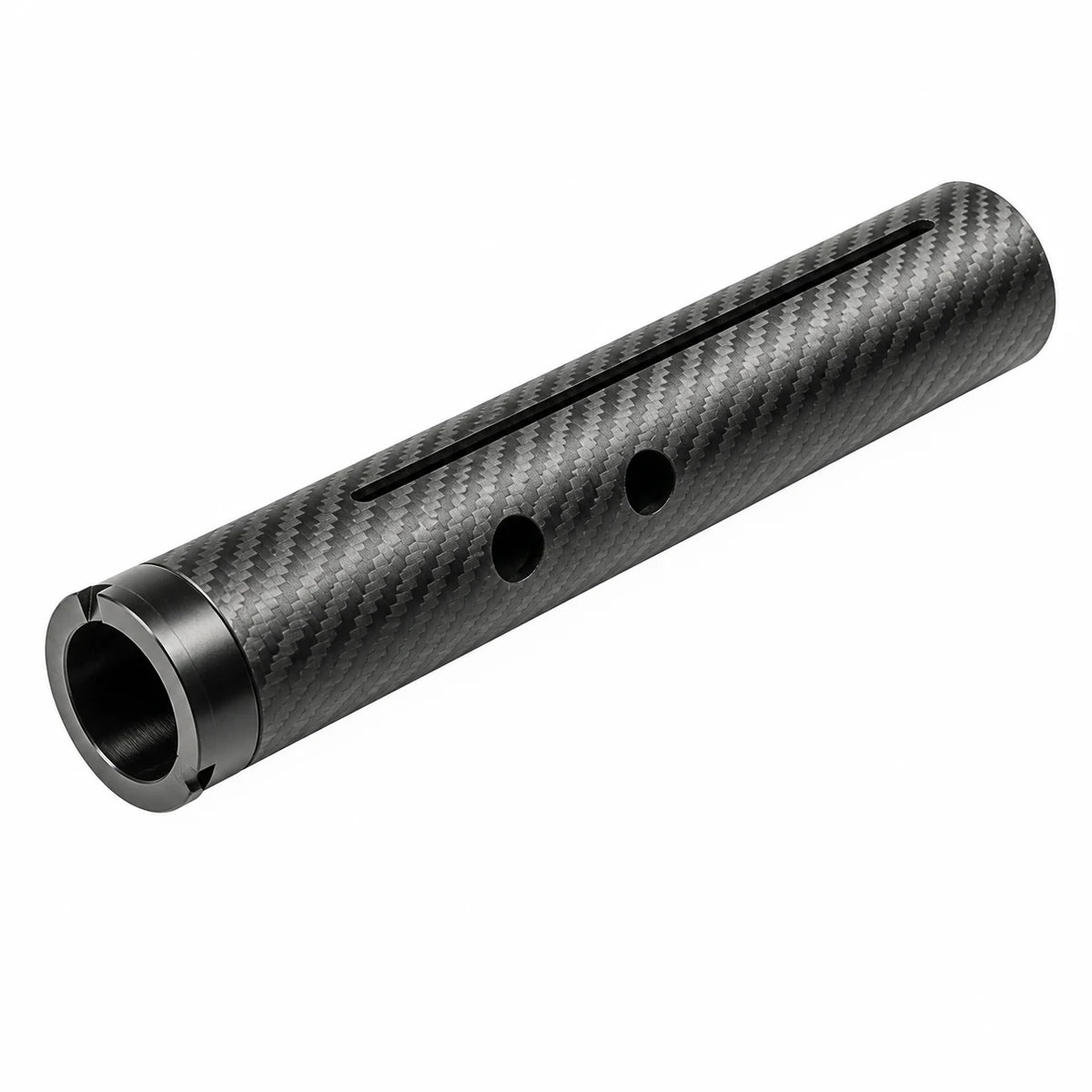
Slotted Composite Tube
Cross holes, controlled slots, end preparation and a specified mechanical interface.
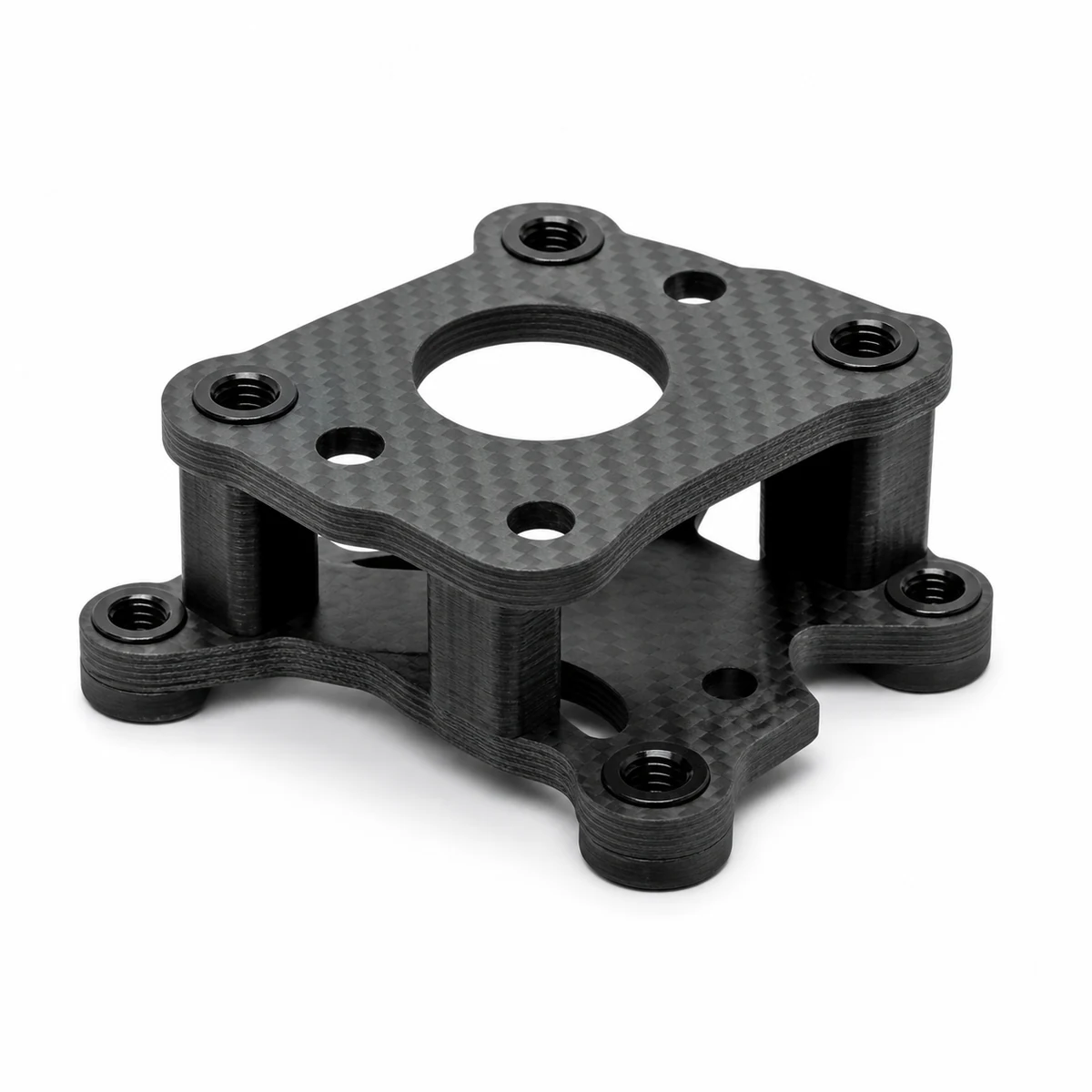
Lightweight Mounting Bracket
Routed laminate plates, locating features and customer-specified threaded interfaces.
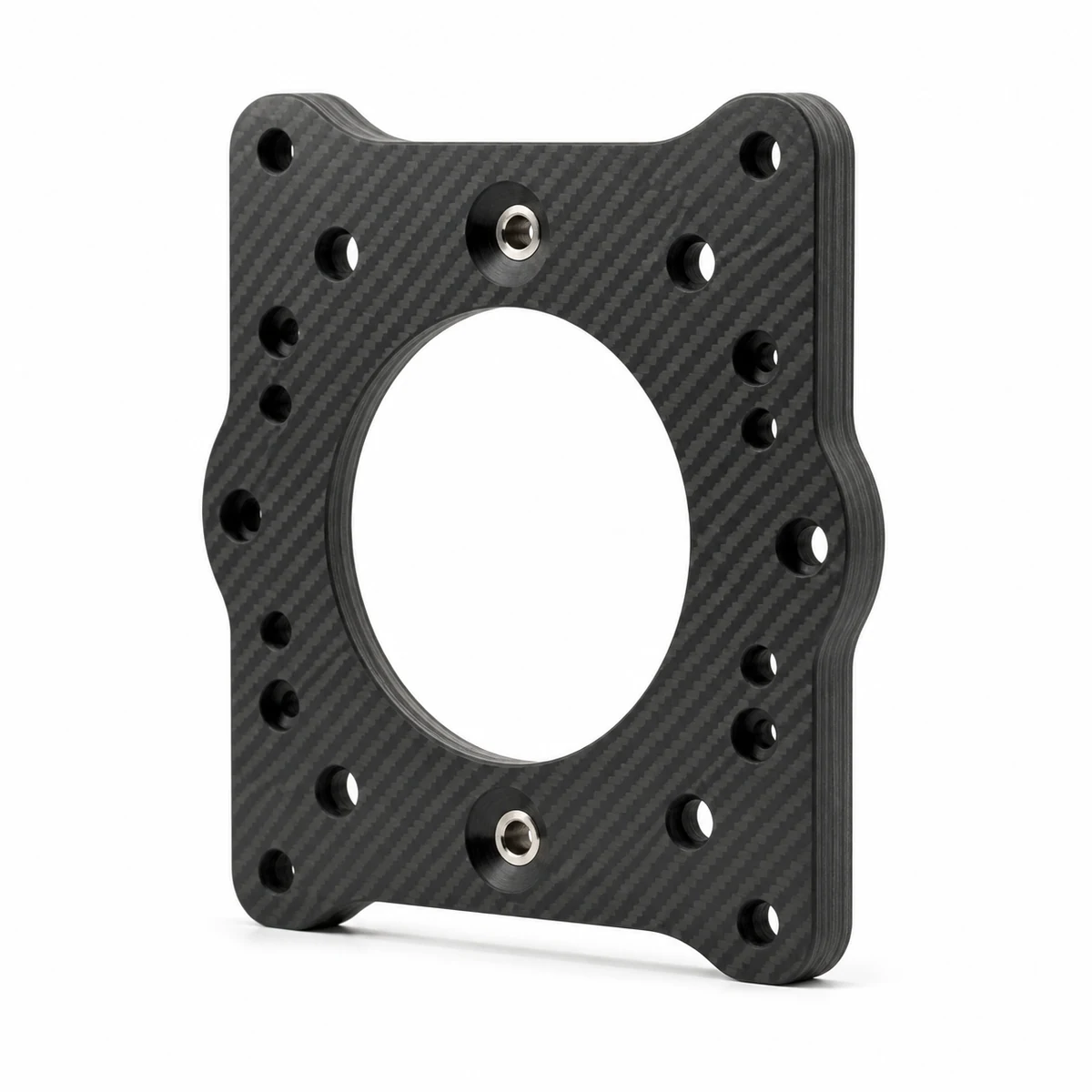
Precision Interface Panel
Large aperture, hole pattern and protected edge geometry for instrument mounting.
Carbon Fiber Machining FAQ
Final capability, process assumptions and inspection scope are confirmed against the actual laminate, geometry and drawing package.
What should I send for a carbon fiber machining quote?
Send the 3D CAD model, controlled 2D drawing, exact laminate or stock specification, quantity, fiber orientation where functional, critical datums, hole and countersink requirements, edge-quality criteria, cosmetic faces and requested inspection records.
Does YXT manufacture raw carbon fiber laminate or prepreg parts?
This page covers secondary machining of cured CFRP plate, tube, panel and customer-specified composite stock. Laminate manufacture, structural qualification and flight certification are outside the standard scope unless they are explicitly reviewed and included in the quotation.
Which carbon fiber stock forms can YXT review?
Typical review scope includes woven CFRP plate, unidirectional laminate, round and rectangular tubes, profiles and selected sandwich panels. The resin system, layup, thickness, core type and material source must match the approved project specification.
How do you reduce delamination and frayed edges?
The process may combine laminate support, suitable composite tooling, controlled engagement, planned entry and exit, tool-life checks and feature-specific drilling or routing sequences. The exact route depends on the laminate and acceptance criteria.
Can YXT machine countersinks, close hole patterns and tube features?
Yes, subject to drawing review. Hole diameter, true position, spacing, countersink geometry, tube wall construction, clamp zones and exit-face requirements all affect the practical process and inspection plan.
How is conductive carbon fiber dust managed?
Containment, local extraction, machine protection and cleanup are selected for the specific cured composite, machine and operation. YXT confirms the process route during project review rather than publishing one universal dust-capture claim.
Can YXT support prototypes and repeat batches?
Yes. YXT can review one-off prototypes, engineering quantities and repeat batches. Material availability, revision control, fixture strategy, feature risk, inspection scope and annual demand determine the practical production route.
Send the Carbon Fiber Part Package for Review
YXT will review the cured stock, geometry, edge criteria, critical interfaces, quantity and inspection needs before confirming the machining assumptions for quotation.
3D CAD and controlled 2D drawing
Exact laminate and stock specification
Critical datums, holes and edge criteria
Quantity, inspection and documentation scope