
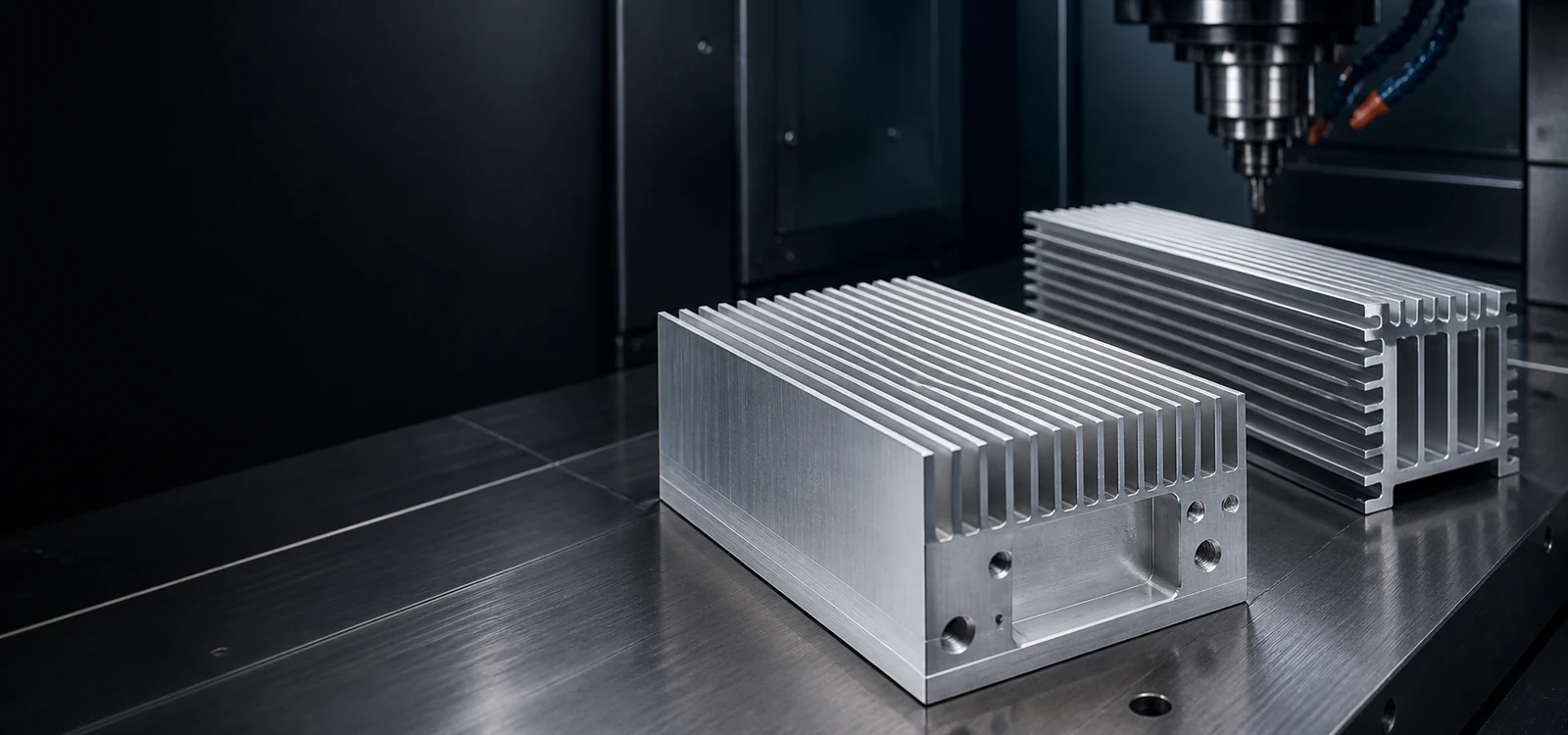
Custom Aluminum Heat Sink Manufacturing
CNC machined, extrusion-based and coordinated aluminum heat sink solutions for electronics, automation, energy and industrial equipment.
CAD & Drawing Review
Geometry, interfaces and inspection points reviewed before quotation
Prototype to Production
Development parts, pilot quantities and repeat-order support
CNC + Secondary Routes
Machining, extrusion coordination, finishing and assembly planning
Inspection by Requirement
Dimensional and material records quoted to the project scope
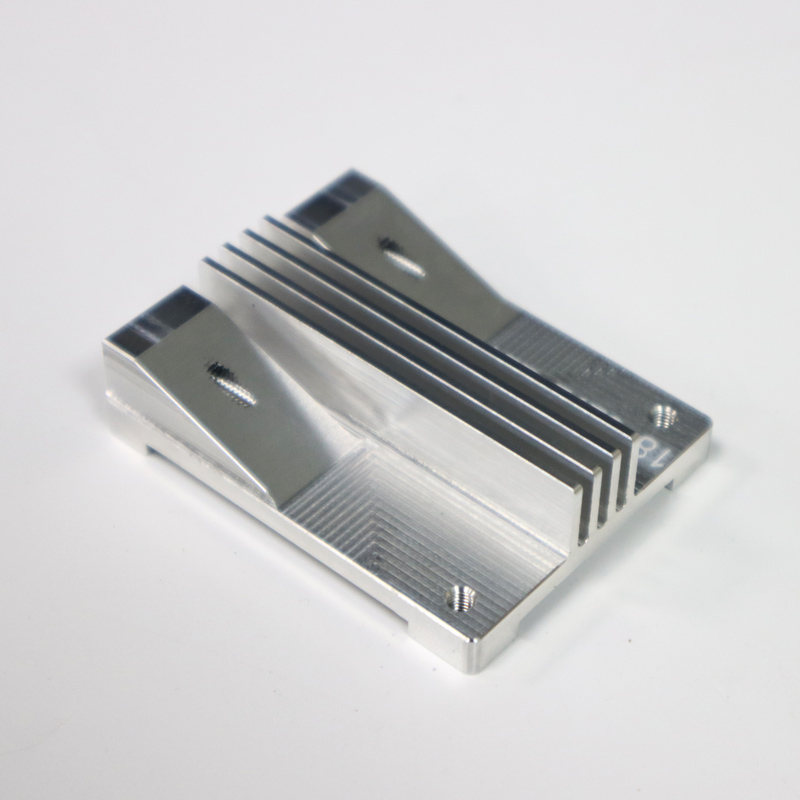
Build the manufacturing plan around the thermal system
A heat sink cannot be evaluated from fin count alone. YXT reviews the heat source, contact surface, airflow, available envelope, mounting method and finish so the selected route supports both thermal intent and manufacturability.
Heat load, target temperatures and ambient conditions
Natural or forced airflow direction and available volume
Base flatness, interface material and contact pressure
Fin height, spacing, thickness and tool access
Mounting holes, threads, clips and electrical clearances
Material, anodizing, masking and cosmetic requirements
Heat sink geometries for different airflow and packaging needs
The best geometry depends on heat flow, available space, orientation, airflow, mounting and production volume. Each card below is an independent Bricks block that can be edited or reordered.
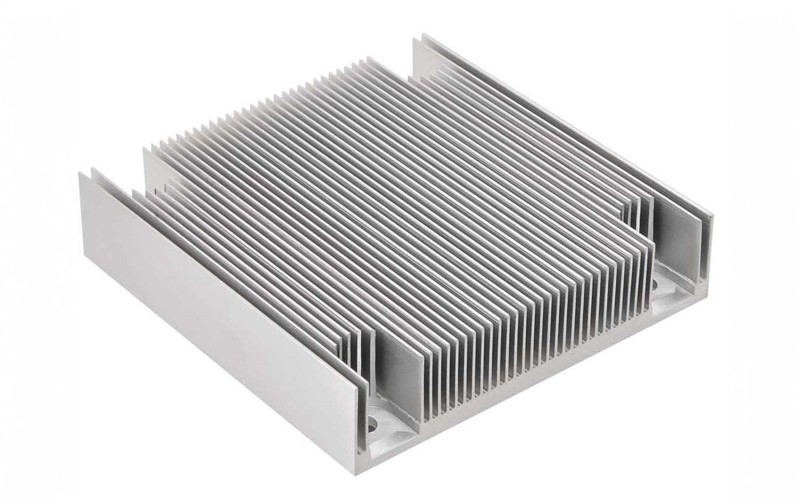
Flat Plate Heat Sinks
Low-profile plates and spreaders for direct device contact, enclosure integration and secondary mounting features.
Best for compact envelopes and custom interfaces
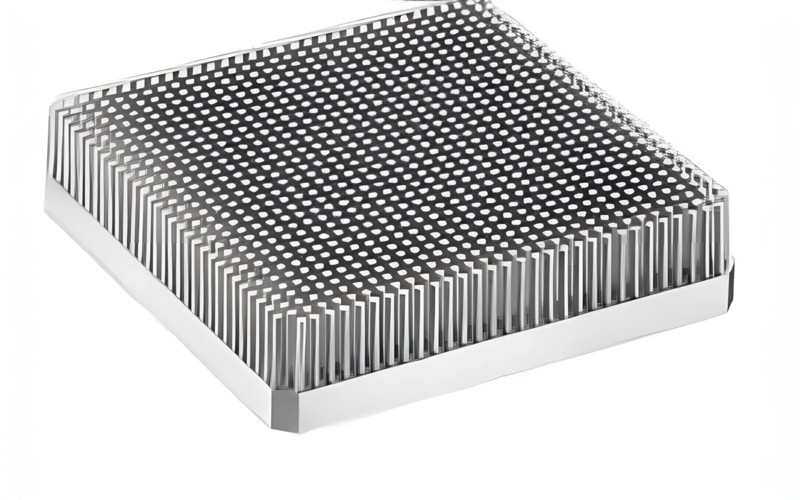
Pin Fin Heat Sinks
Omnidirectional pin arrays that can support airflow arriving from more than one direction.
Useful where flow direction may vary
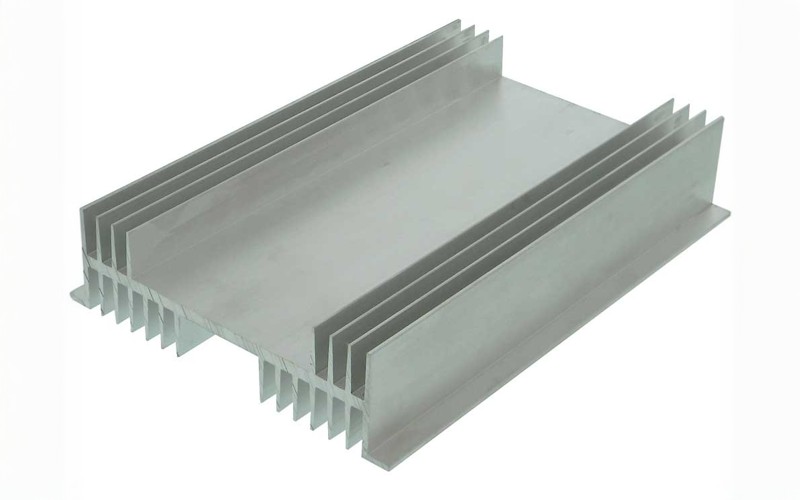
Flanged Heat Sinks
Integrated flanges add mounting surfaces, stiffness and reliable mechanical attachment around the thermal core.
Mounting and cooling in one component
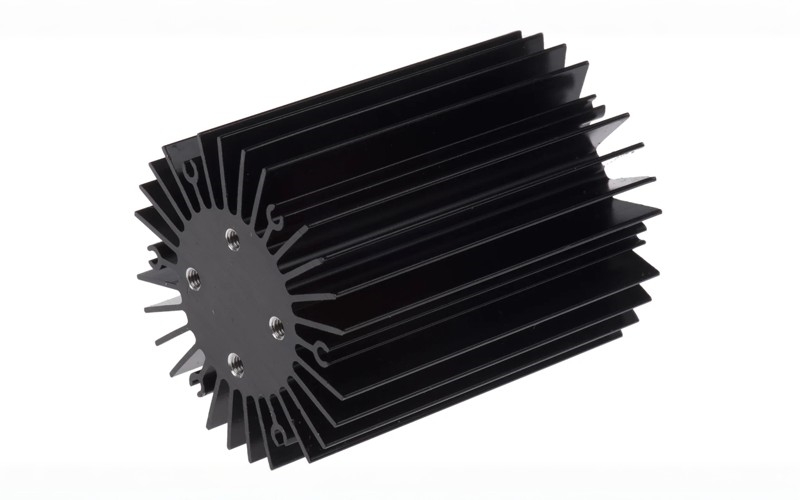
Star and Radial Heat Sinks
Radial fins distribute surface area around cylindrical devices, lamps, motors and compact power assemblies.
Designed around circular heat sources
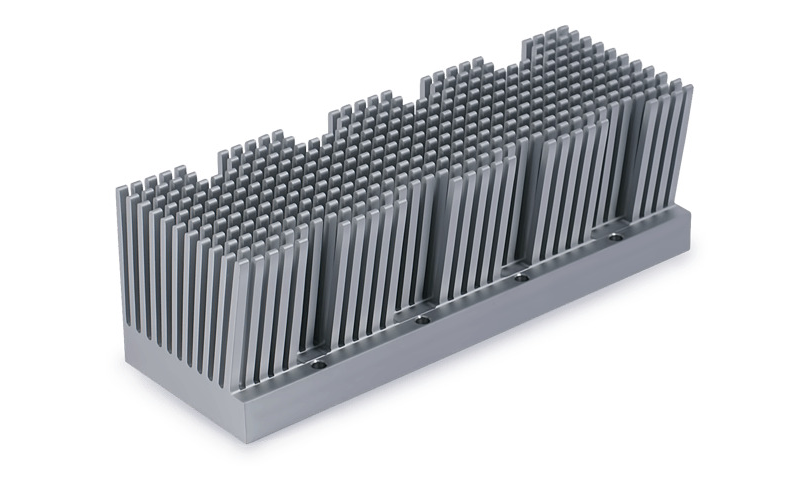
Cross-Cut Heat Sinks
Interrupted fin paths create more exposed edges and permit cross-flow through the heat sink body.
For multi-directional forced airflow
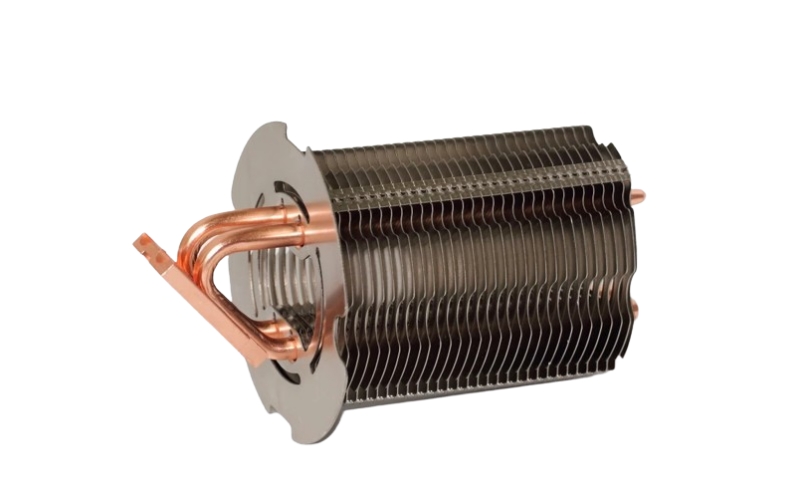
Zipper Fin Heat Sinks
Thin folded-fin structures provide dense surface area when a bonded or assembled solution fits the program.
High fin density for constrained packages
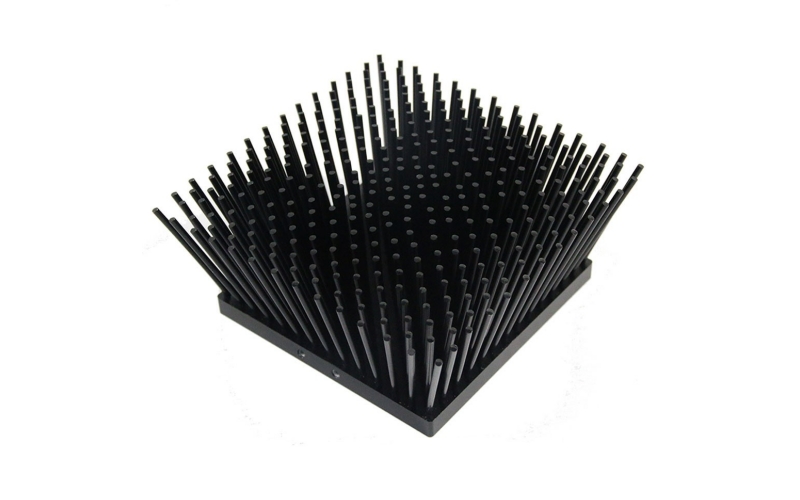
Wave Fin Heat Sinks
Formed or machined wave profiles increase exposed surface while managing airflow through the available channel.
Geometry tailored to the flow path
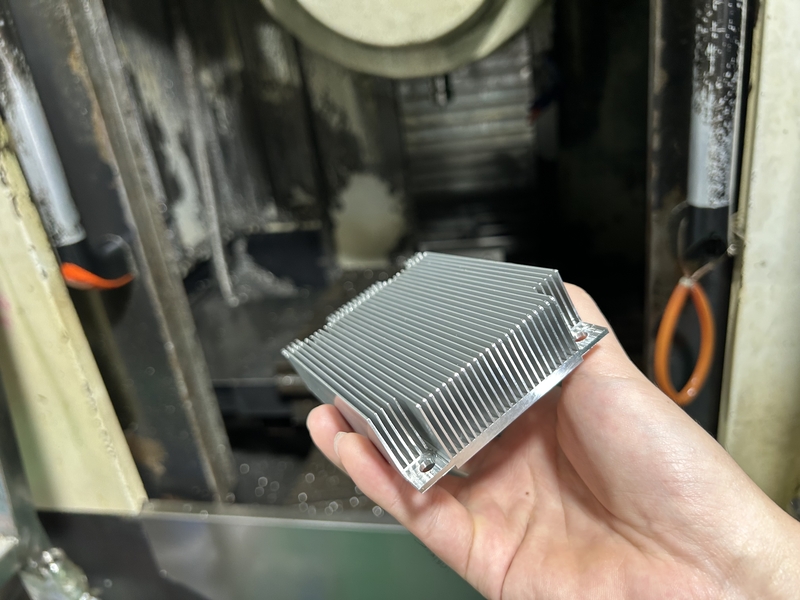
Custom Machined Heat Sinks
CNC machining integrates pockets, interfaces, holes, threads, sealing details and local fin geometry into one part.
Maximum freedom for custom interfaces
Aluminum heat sinks for electronics and industrial systems
YXT supports custom thermal components that combine heat transfer surfaces with mounting, protection and enclosure functions.
Power Electronics
LED Lighting
Motor Drives
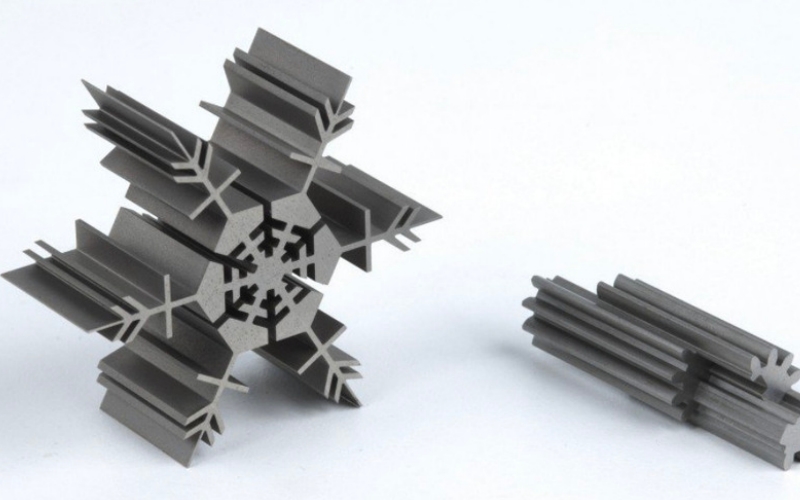
Telecom & Data Equipment
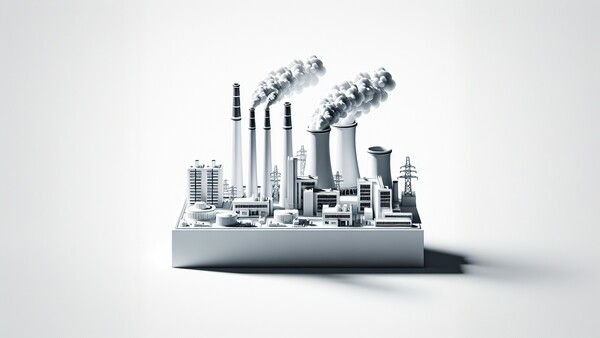
Energy & Charging
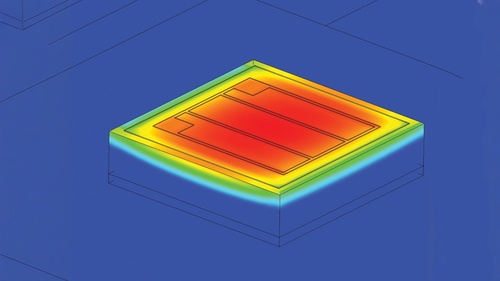
Industrial Automation
Select the manufacturing route around geometry, volume and risk
YXT directly supports CNC machining and can coordinate suitable extrusion, casting or assembled-fin routes when they are confirmed in the quotation.
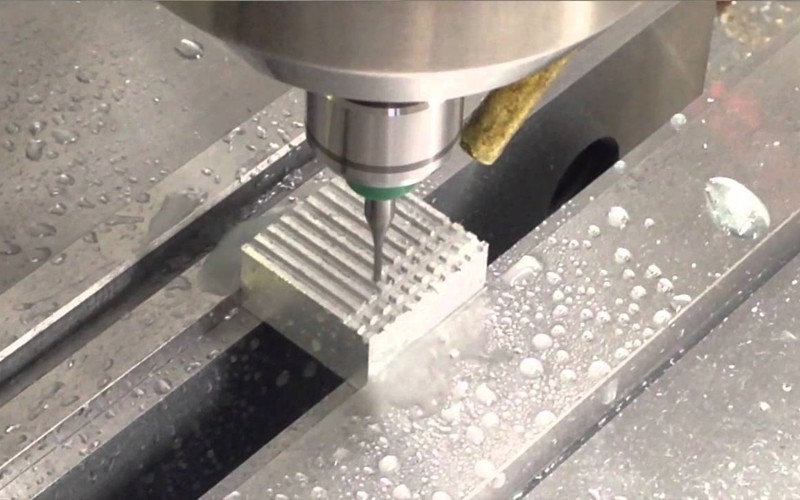
CNC Machining from Solid
Best suited to prototypes, lower volumes and designs that integrate complex interfaces, pockets, mounting details or local fin patterns.
View CNC Milling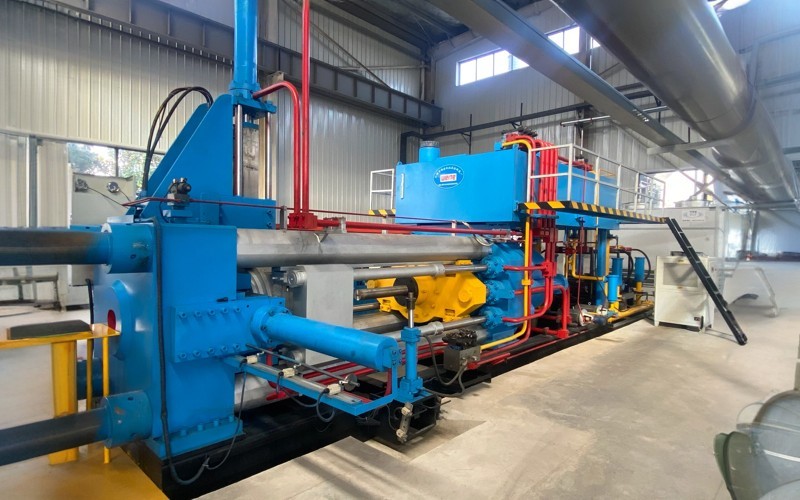
Extrusion + Secondary CNC
An extrusion can establish the continuous fin profile before YXT coordinates cutting, facing, drilling, threading and finish operations.
Discuss This Route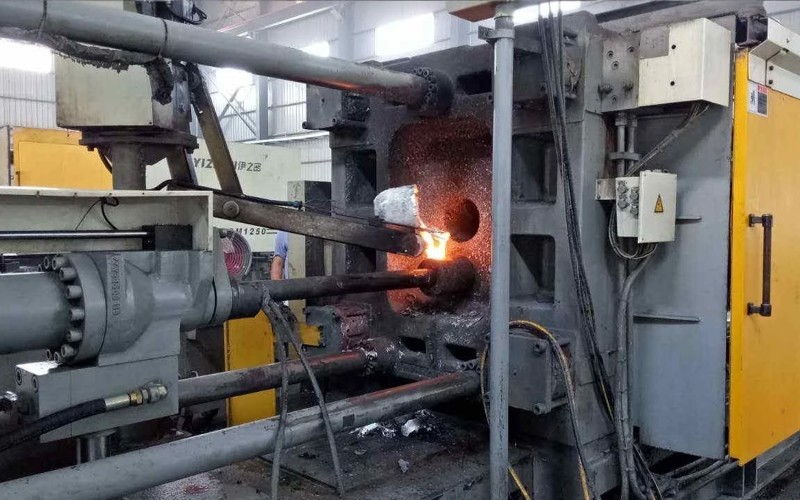
Die Casting + Finish Machining
Casting may suit higher-volume housings with integrated thermal features, followed by CNC work on critical interfaces and holes.
Discuss This RouteSkived or Bonded Fin Routes
Thin-fin and assembled structures can be reviewed when dense surface area is required and the program supports a coordinated supplier route.
Discuss This RouteChoose aluminum and finish around conductivity, strength and process
Alloy choice affects thermal conductivity, extrusion behavior, machining, weight, strength, corrosion resistance and appearance. Final selection must follow the drawing and validated system requirements.
Aluminum 6063
Frequently considered for extruded heat sink profiles because it balances extrusion behavior, finish response and thermal performance.
Typical route: extrusion with secondary CNC
Aluminum 6061
A versatile option for CNC machined heat sinks requiring strength, mounting features and more complex integrated geometry.
Typical route: plate, bar or billet machining
Aluminum 1050 / 1070
Higher-purity aluminum may be considered where conductivity is prioritized and the design can accommodate its lower strength.
Availability and temper must be confirmed
Aluminum 7075
High strength can support demanding structures, although its conductivity and finishing behavior differ from common heat sink alloys.
Use only where strength justifies the tradeoff
Finishes that protect function and appearance
As-Machined & Deburred
Controlled contact surfaces, broken edges and specified roughness without a decorative coating.
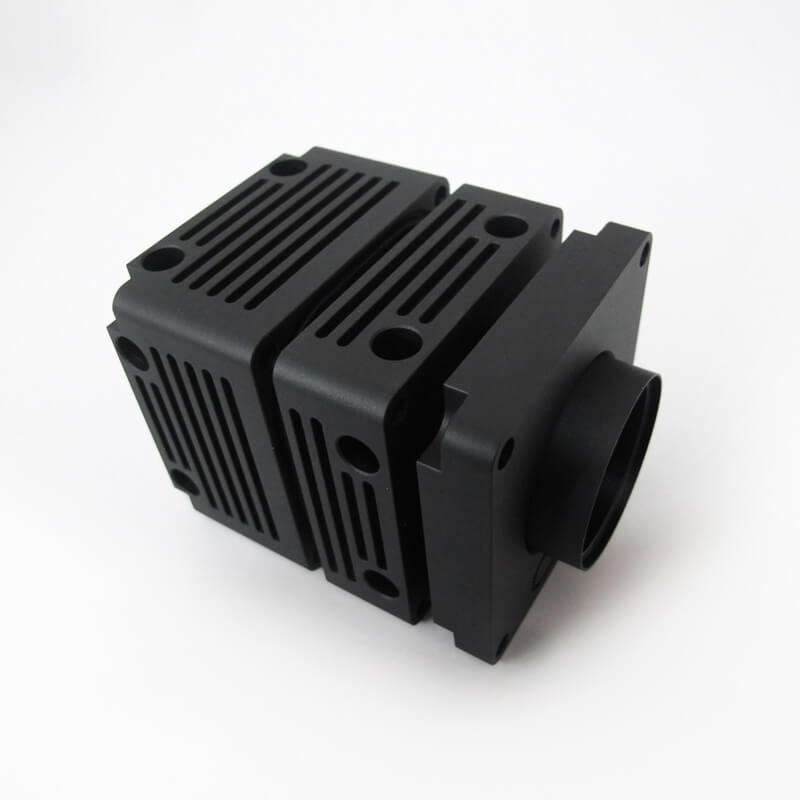
Anodizing
Natural, black or colored anodizing can improve corrosion resistance and appearance while masking keeps required interfaces clear.
Conversion & Functional Coatings
Chemical conversion or project-specific coatings may be coordinated when electrical contact, bonding or corrosion behavior requires them.
Published alloy properties are reference data, not a guaranteed system result. Material, temper, stock form, finish and documentation must be confirmed for each order.
A practical path from thermal brief to repeat production
Each stage confirms the current drawing, manufacturing route, inspection scope and commercial assumptions before the project advances.
Thermal Brief
Share heat load, temperature targets, airflow, envelope, interface and mounting conditions.
DFM & Route Review
Review fin geometry, tool access, stock form, finish, tolerances and inspection needs.
Prototype Build
Manufacture development parts for assembly, fit and system-level thermal evaluation.
Pilot Verification
Confirm repeatable workholding, critical dimensions, finish masking and agreed records.
Repeat Production
Control revision, routing, material and order-specific inspection for released quantities.
Lead time is quoted from confirmed geometry, material availability, route, quantity, finishing, inspection and supplier coordination requirements.
Validate the heat sink inside the actual system boundary
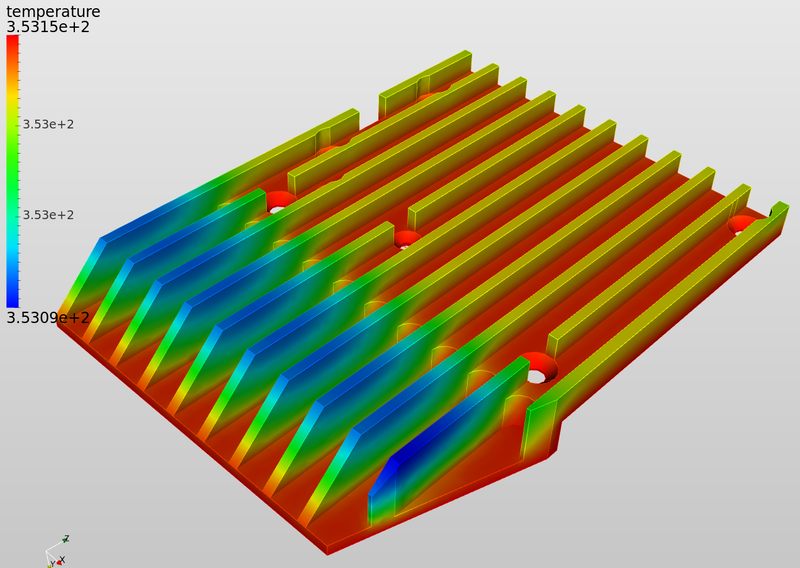
Thermal performance depends on the complete assembly, not the aluminum part alone. Simulation and prototype testing should use realistic heat input, interface resistance, airflow, orientation, enclosure temperature and mounting pressure.
Confirm contact area, flatness and interface material
Model or measure airflow through the final enclosure
Test hot spots and steady-state temperatures under real load
Revalidate after material, finish, geometry or fan changes
YXT does not assign a fixed thermal resistance or temperature guarantee unless boundary conditions, method and acceptance criteria are separately agreed in writing.
Inspect the interfaces that control assembly and heat flow
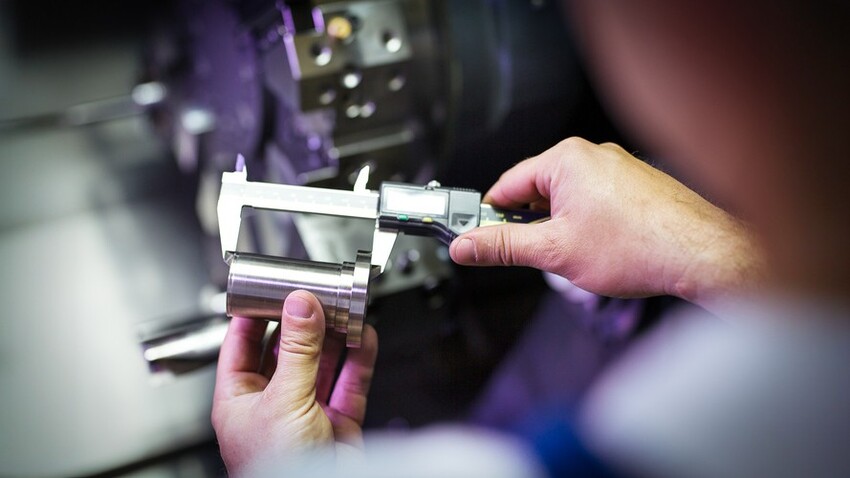
Heat sink inspection should concentrate on the released drawing and the features that affect contact, mounting, airflow and assembly. Required records must be stated during RFQ so they can be included in the route and quotation.
Material & temper
Verify the ordered alloy, temper, stock form and requested supplier documentation.
Base & contact surface
Inspect thickness, flatness, roughness and protected contact areas to the drawing.
Fin geometry
Check height, thickness, spacing, damage and burr condition where specified.
Mounting features
Verify hole position, threads, counterbores, slots and assembly datums.
Finish & masking
Review color, coverage, contact points and masked interfaces against the agreed sample or requirement.
Reports & traceability
Coordinate dimensional reports, material records and order-level traceability when quoted.
YXT manufactures components to customer specifications. System-level thermal validation, electrical safety, product qualification and regulatory compliance remain the customer's responsibility unless a separate written scope states otherwise.
Questions about custom aluminum heat sinks
Send the latest CAD, drawing and thermal boundary conditions for advice tied to your actual assembly.
Ask YXT an Engineering QuestionWhich aluminum alloy is best for a heat sink?
There is no single best alloy for every design. 6063 is commonly considered for extrusion, while 6061 is versatile for CNC machined heat sinks. Higher-purity aluminum may improve conductivity but provides less strength. The drawing, manufacturing route and system requirements should control the final choice.
Can YXT machine a heat sink directly from solid aluminum?
Yes. CNC machining is useful for prototypes, lower quantities and complex designs that integrate pockets, mounting interfaces, threads, sealing features or local fin geometry. Tool access, fin thickness and depth are reviewed before quotation.
Can you support extruded or die-cast heat sinks?
YXT can coordinate extrusion or die casting with secondary CNC operations when the route, tooling, quantity and supplier scope are confirmed in the quotation. CNC machining remains the directly supported core process.
Can heat sinks be anodized?
Yes. Natural, black and colored anodizing can be reviewed. Contact surfaces, grounding points, threads and other functional areas may require masking. Color and appearance should be agreed with realistic material and process expectations.
How should I specify thermal performance?
Provide heat load, ambient and enclosure temperature, airflow or fan data, orientation, interface material, contact pressure, available volume and target component temperature. A fixed thermal result cannot be guaranteed without agreed boundary conditions and a validation method.
Can YXT support prototypes and repeat production?
Yes. YXT can review development parts, pilot quantities and repeat orders. The route, tooling, inspection frequency, finish and documentation are planned around the current revision and expected quantity.
Ready to review your custom heat sink?
Send YXT your CAD files, dimensioned drawing and system conditions. We will review the manufacturing route, material, fin geometry, interfaces, finishing, inspection and quotation assumptions.
INCLUDE WITH YOUR RFQ
3D CAD and controlled 2D drawing revision
Heat load, airflow, ambient and target temperatures
Material, finish, masking and mounting requirements
Prototype and expected production quantities