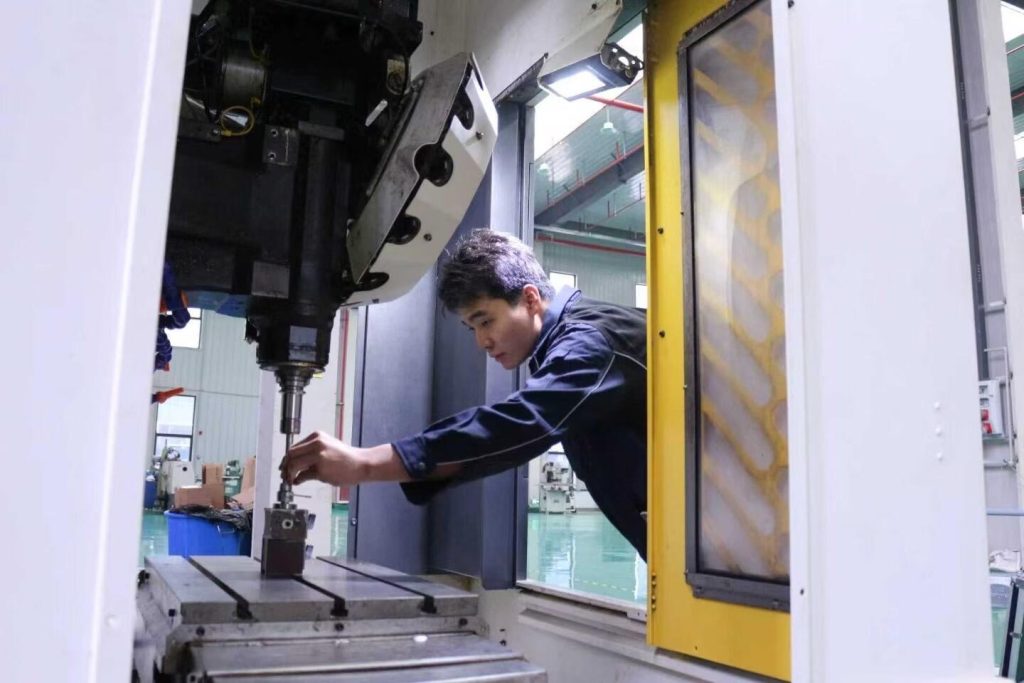

For thread milling vs tapping CNC parts, tapping uses a tool matched to the thread size and form; cutting taps remove material, while forming taps displace a suitable material without cutting chips. Thread milling uses a helical CNC path, with thread size adjusted through the programmed path. It can serve more than one diameter within the tool's approved pitch, profile and size range. OSG's thread-mill explanation and forming-tap description explain those differences. Review tapping for an appropriate repeated standard feature, and thread milling when adjustment or tooling flexibility addresses a real constraint. Neither route removes the need for adequate access and final thread acceptance.
The quotation should deliver an accepted thread, not merely promise that a named process will be used.
Start with the thread requirement
Identify the thread system, nominal size, pitch, tolerance or fit requirement and whether the hole is blind or through. Define the usable full-thread length separately from the drilled hole.
Also identify the final surface condition. A thread accepted before coating may not represent the delivered functional condition. If a special gauge or mating-part check is required, include it before quotation.
For CNC milling review, show the complete feature rather than an isolated thread note. Nearby walls, shoulders and access can affect the manufacturing decision.
Understand what changes between the processes
Sandvik Coromant's tapping guidance emphasizes material, hole type, clamping, drilled hole size and coolant/chip evacuation. Those inputs remain important even when the thread designation looks ordinary.
Sandvik's threading application guide describes thread milling and its toolpath-based diameter adjustment. Its application guidance should be interpreted for the selected tooling and setup, not as a universal design limit.
Ask the supplier which specific risk or efficiency justifies its preferred route. An explanation tied to your hole is more useful than a general claim that one method is modern or precise.
Compare the practical tradeoffs
| Process factor | Tapping | Thread milling |
|---|---|---|
| Thread generation | Size/form-matched tap cuts or forms the thread | Milling cutter follows a simultaneous helical path |
| Chips | Cutting taps generate chips; forming taps do not | Cut chips require evacuation |
| Size adjustment | Tool and process define the generated thread | Path/offset provides dimensional adjustment |
| Tool flexibility | Tap is selected for the thread size and pitch | Some tools cover multiple diameters at the same pitch/profile within approved limits |
| Useful selection reason | Established standard feature at the planned quantity | Size adjustment, difficult feature or suitable tooling flexibility |
| Main check | Correct hole preparation, material suitability and tapping conditions | Machine interpolation, tool range, access and profile requirements |
EMUGE's tooling guidance specifically warns that high-performance thread mills may be designed for a particular pitch and diameter. Do not assume one cutter can make every thread. OSG's forming-tap description also makes clear that forming is a distinct process, so a cutting-tap preparation chart should not be adopted without the selected manufacturer's guidance.
This checklist helps select a route without prescribing process settings. The supplier should assess machine capability, tooling and stability.
If both routes meet requirements, compare the complete order assumptions. A shorter cutting cycle may not settle the total setup, tooling and inspection comparison at the actual quantity.
Keep hole preparation in the discussion
The thread operation depends on the prepared hole. Diameter, depth, entry condition and chip clearance should be reviewed together with the thread requirement.
For blind holes, make the required engagement visible. Do not ask the shop to infer whether a fastener must reach the full modeled depth or whether a lead-in and incomplete thread are acceptable.
If a proposed design change would improve access or clearance, record its effect on function before approving it. The manufacturing route should not silently change the required usable thread.
During custom machining planning, ask the supplier to identify these questions before the offer is finalized.
Agree acceptance independently of the process name
A tapping or thread-milling instruction does not replace an acceptance requirement. State the thread designation, final condition and agreed verification scope.
Where functional engagement matters, provide the mating fastener specification or relevant interface requirements. Do not substitute an uncontrolled bolt from stock for a defined gauge requirement unless that is the agreed method.
A release checklist should confirm:
- Thread system, size and pitch.
- Required tolerance or fit.
- Usable full-thread length.
- Hole preparation and bottom clearance.
- Final coating or finishing state.
- Inspection and any special gauge requirement.
The supplier may recommend an alternative method while preserving the specified thread. Approve the process change only where it affects a controlled or qualified route.
Questions about thread generation
Is thread milling always more accurate?
Accuracy depends on the tooling, setup, compensation and measurement method. Require the finished result rather than assuming a universal ranking.
Is tapping always cheaper?
Quantity, thread geometry, material, tooling and setup influence the complete comparison.
Can a blind thread reach the modeled bottom?
Review the required full-thread length and tool clearance. A CAD hole depth is not automatically usable engagement.
Must the buyer choose the process?
Usually the supplier can propose it, unless the design, qualification or purchase requirement controls the method.
Should threads be checked after finishing?
Define final acceptance around the delivered condition and any dimensional effect of the finishing route.
Related guides: NPT vs BSPP Machined Ports: Specify the Sealing System; Thread Inserts in Aluminum CNC Parts: Decide Before Machining.
Send the complete hole requirement
Upload the drawing with thread callouts, engagement, material, quantity and final finish. Ask YXT to explain the proposed tapping or thread-milling route and any feature questions that need resolution before production.