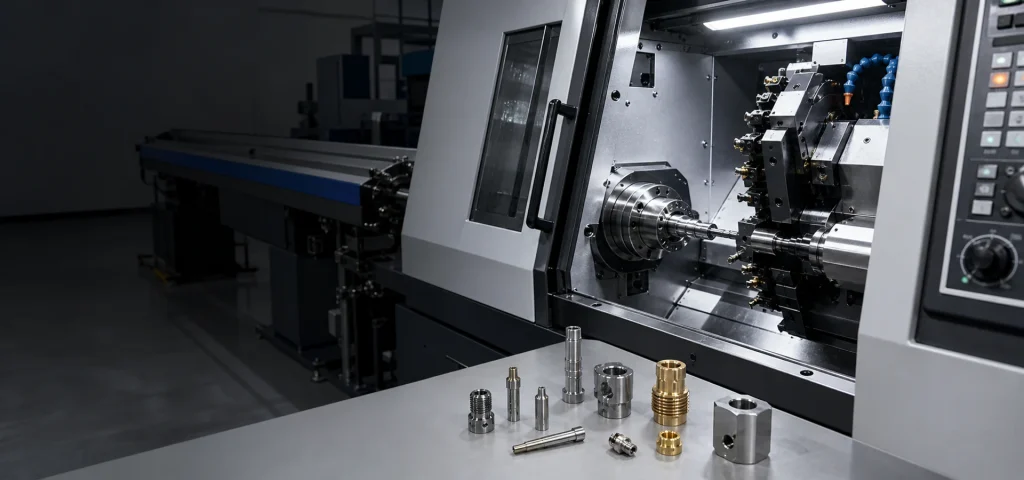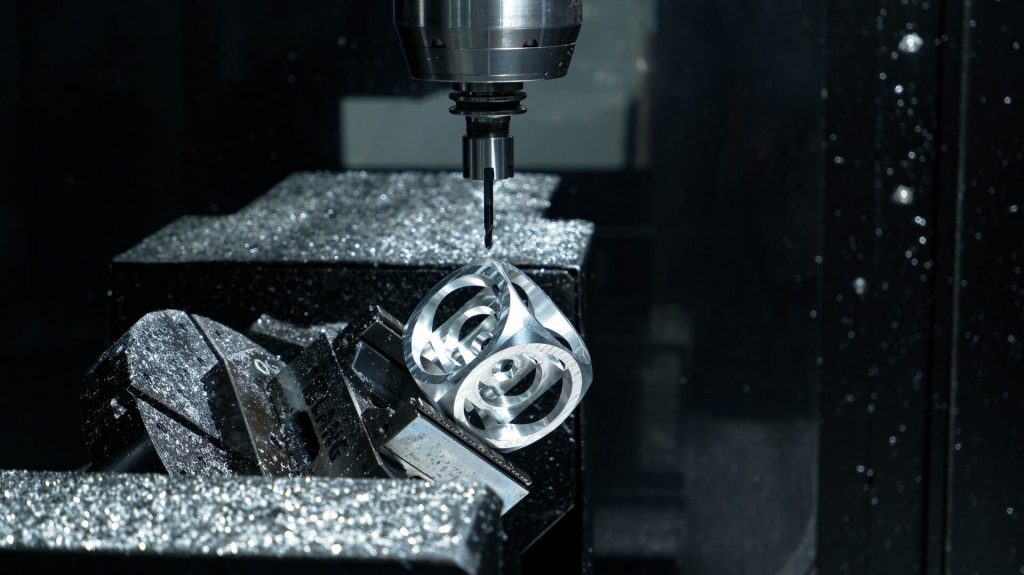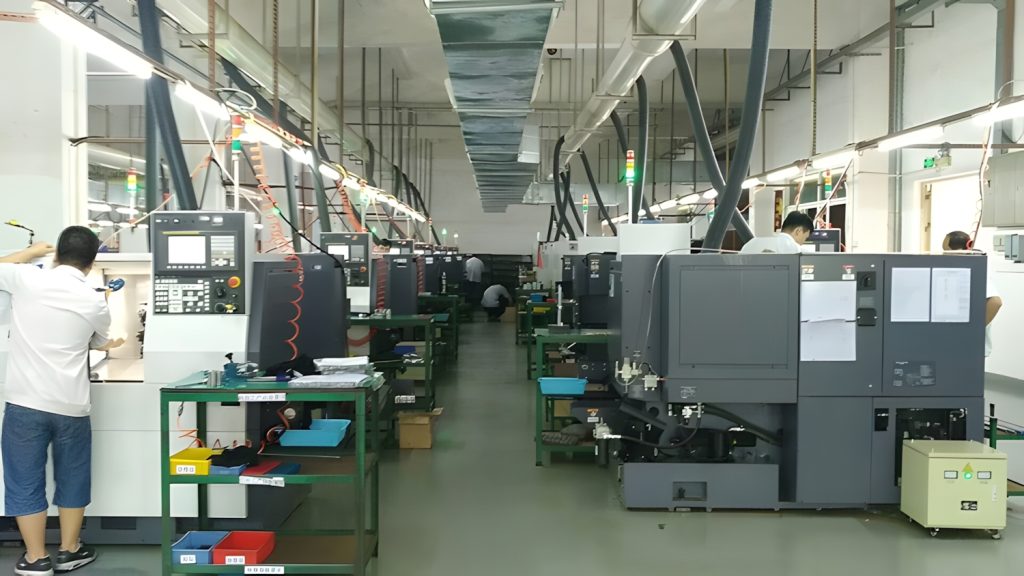
A CNC machining China DFM review before quote is a written pass over the drawing before anyone types a unit price. The reviewer checks tool access, L/D in pockets, inside corner radii vs end mill diameter, thin walls, and whether Ra 3.2 or Ra 1.6 is called out. Material and temper (6061-T6, 7075-T6, 304, POM) must be on the RFQ. Open dimensions should point to ISO 2768-m. Boxed fits stay on the 2D PDF. Type II anodize (typical 5-25 µm) vs Type III hardcoat changes masking and hole size. The output is an assumption list the quote is based on.
US and EU teams send China RFQs with a STEP, a messy PDF, and a quantity. The factory that skips DFM will still quote. You then discover the pocket cannot be finished or the anodize fills a thread.
This is the review you want the shop to run, and the review you can run yourself before you hit send. The decision is simple: do not accept a unit price until the assumption list exists. File control is part of DFM. If the shop reviewed Rev B while you think you sent Rev C, the review is fiction.
Key takeaways
- DFM belongs before the number. After the number it is a change order.
- Name stock, temper, Ra, and finish. Color on a CAD screen is not a spec.
- ISO 2768-m covers open dimensions. It does not cover a pressed-in bearing bore.
- Type II vs Type III anodize is a dimensional event, not only a color choice.
- A quote without an assumption list is not a DFM review.
CNC machining China DFM review before quote: what to send
A CNC machining China DFM review before quote cannot start from a screenshot. The shop needs a solid they can section and a 2D sheet they can balloon.
Send a STEP of the latest model, a PDF with revision, material and temper, quantity, finish, and the three features that fail the assembly if they are wrong. That is the same pack used to pick mill vs turn vs 5-axis on custom CNC machining services. Native CAD helps for a question. It is not a substitute for STEP plus PDF.
Units must match. Filenames should carry the revision: HOUSING-A-REV-C.step and HOUSING-A-REV-C.pdf. If the part is an aluminum CNC housing, check stock thickness against plate you can actually buy.
Write the RFQ header so DFM has a commercial frame. Quantity changes fixture cost. A 2-piece prototype DFM may accept a leftover fillet. A 200-piece lot may not. Finish changes hole size. Inspection changes which features the reviewer must treat as process-critical.
A usable send looks like this in the email body:
- Files:
HOUSING-A-REV-C.step+HOUSING-A-REV-C.pdf(mm) - Material: 6061-T6 plate, mill cert to follow the lot
- Qty: 5 now, breaks at 25 and 80
- Finish: Type II clear, typical 5-25 µm film, mask 4x M4, H7 bores after coat
- Criticals: two Ø10 H7, seal face Ra 1.6, pocket floor 1.5 mm
- Open sizes: ISO 2768-m unless boxed
- Please return DFM assumptions before unit price
If you skip “assumptions before unit price,” many estimators will still type a number. You then argue about radii after the PO. That is not a review. That is a fight.
Do not dump five native configs, an assembly, and two PDFs titled Final and Final2. The reviewer will open the first solid that loads. File control is DFM. One live revision, one zip, one subject line.
Walk the geometry in a fixed order
Geometry review is a sequence, not a vibe. You are looking for features that force extra setups, tiny tools, or scrap after finishing.
- Identify datums and the primary clamp face (PDF plus STEP). Done when you can say which face sits on the vise.
- Measure pocket L/D and inside corner radii (CAD vs intended end mill). Done when every closed pocket has a finishable radius, or you accept a leftover fillet.
- Flag thin tall walls (section view). Done when you thicken, rib, or add a deflection note.
- List holes, threads, and depth-to-diameter on the 2D. Done when tap depth is not only in the model.
- Separate open dimensions from boxed fits (ISO 2768 vs GD&T). Done when the quote says which features get CMM.
- Apply finish to dimensions (Type II / Type III, bead blast). Done when mask, plug, and after-finish sizes are written.
A common failure is a 0.2 mm inside corner in a 20 mm deep pocket. No end mill finishes that.
Walk it with numbers. Pocket depth 20 mm, intended finish mill Ø6 mm, L/D is already past a comfortable 3:1 for a finish pass in 6061 if you also demand a sharp corner. Inside corner R0.2 mm needs a Ø0.4 mm tool. That tool will not reach 20 mm. The DFM note is: open to R3, EDM the corners, or accept a leftover fillet. Pick one before the quote.
Thin walls follow the same habit. A 1.0 mm wall, 25 mm tall, in 6061-T6 will chatter on a 3-axis mill. You can still cut it. The quote must include slower passes, a fixture, or a warning that flatness after Type II may move. If you stay silent, the shop assumes a stiff wall and you pay later.
Threads need 2D ownership. A modeled M4 that is 12 mm deep in a 10 mm boss is a tap-through into a pocket. The reviewer should ask: through or blind, class 6H, and whether Type II is masked. Anodizing and related finishing is a dimensional event on those holes.
Datums that cannot be clamped are a stop. If datum A is a small cosmetic boss and the big face is undatumed, the mill will hold the big face anyway. The CMM will then fail position because the frame does not match the vise. Fix the frame on the PDF, or accept that the shop will propose a manufacturing datum. Either way, write it before the number.
Tolerances and finish callouts that change the number
ISO 2768-1 (1989) is the usual default for unmarked linear dimensions on metric drawings. The ISO 2768-1 general tolerances document is what many China shops mean by “standard tolerance.” ASME Y14.5-2018 is what US drawings use for datums and position; see ASME Y14.5.
Do not put ±0.02 mm on every edge. Put the money on the bearing bore, the PCB pattern, and the seal face.
Anodize is a thickness and a rack. MIL-A-8625 still shows up on US drawings as Type II and Type III. The MIL-A-8625 anodic coatings listing (DLA; MIL-A-8625F, 1993, still cited) is the reference many prints point to. Type II films are often specified in a 5-25 µm range. Masking, plugged threads, and before/after-coat sizes must be in the DFM note.
| Topic | Shop assumption if you stay silent | Safer RFQ note | Best for | Watch-out |
|---|---|---|---|---|
| Open dimensions | ISO 2768-m | Write the class on the PDF | Brackets, covers | Not for bearing bores |
| Inside corners | Shop picks a tool radius | Radius the mill can finish, or EDM | Pockets | 0.2 mm corners in deep pockets |
| Surface | Ra 3.2 as machined | Ra 1.6 on seal faces only | Most 6061 parts | Ra 0.8 everywhere inflates time |
| Anodize | Type II, no mask plan | Type II or III, mask, after-size | Aluminum housings | Threads and fits grow or fill |
| Thin floors | Same feed as thick stock | Floor thickness + fixture note | Pocketed covers | Chatter then Type II warp |
| Inspection | Caliper on everything | CMM on boxed / GD&T only | Fits and position | Paying CMM for ISO 2768 faces |
Bottom line: the quote should repeat these notes. If it does not, you are buying the left column.
Finish vs size is the DFM item that dies in chat. If the H7 is after coat, the mill bores undersize on purpose. If you meant before coat and never said so, the coated bore is tight. Write “dimensions apply after Type II unless noted.” Then the assumption list can copy that sentence.
Stock callouts matter for aluminum CNC plate. A 28 mm finished height from 30 mm plate is a different distortion story than from 50 mm plate with heavy pocketing. Typical 6061-T6 plate from distributor catalogs is not a YXT guarantee. It is a reminder to name temper and starting thickness so the reviewer can talk about residual stress and floor thickness together.
When a CNC machining China DFM review before quote should stop the job
A CNC machining China DFM review before quote should stop the job when the model cannot be held, finished, or inspected as drawn without a process the RFQ did not ask for. That is a service, not a delay.
Stop for: no 2D revision, inch/mm mismatch, material missing, Type III on unmarked fits, or a true position with no datum. Stop for implant-style medical features or PPAP-style automotive packs unless you have already asked whether that shop supports them.
Write the stop as questions: “Pocket A cannot be finished with a Ø6 mm mill at this L/D. Open the radius to R3 or accept a leftover fillet. Which do you want?”
File-control stops belong on the same list. Stop if two PDFs are in the zip (Rev B and Rev C). Stop if the STEP overall size is 25.4 times the PDF (units). Stop if the title block says 7075-T6 and the email says 6061. The reviewer who quotes through those conflicts is not faster. They picked a silent winner.
A stop is still a DFM review. The output is a short list, not a refusal to talk. Example:
- Cannot quote until one revision is named. We opened both Rev B and Rev C.
- Pocket A: leftover fillet or R3. Need your pick.
- Ø10 H7: after Type II or before? Quote will change.
- Position frame has no datum C on the sheet. Add C or we will propose a manufacturing datum.
If the buyer answers those four, the number can be real. If the buyer says “just quote it,” the number is a placeholder and everyone knows it except purchasing.
Do not treat a stop as a chance to invent capability. If the print implies a process the shop does not run (for example a PPAP pack or an implant geometry), the honest line is: ask whether they support it. This page does not claim that YXT does.
Worked RFQ: DFM notes before the unit price
Here is a single-part example you can copy into an RFQ folder. The point of a CNC machining China DFM review before quote is the written list, not a prettier email.
Buyer pack:
CVR-221-REV-D.step/CVR-221-REV-D.pdf- 6061-T6, qty 12, Type II black, ISO 2768-m unless boxed
- Pocket 16 mm deep, inside corners shown sharp in the model, PDF silent
- Two Ø8 H7, no before/after coat note
- Seal face Ra 1.6, rest Ra 3.2
- Position Ø0.08 mm on a 4x M4 pattern, datums A and B only
Shop DFM reply (this is the review):
- Sharp model corners in a 16 mm pocket: we cannot finish below about R3 with a Ø6 mm mill at this depth. Options: R3 on Rev E, leftover fillet, or EDM (not in this RFQ). Need pick before price.
- Ø8 H7 vs Type II: we assume sizes after coat, mask optional on M4. Confirm.
- M4 pattern position with only A-B: we will use the long edge as a shop stop unless you add datum C. Confirm.
- Inspection: CMM on two H7s and the pattern. Caliper on open sizes per ISO 2768-m.
- Stock: 20 mm plate, two setups. Floor under pocket measures 1.8 mm in the STEP. Chatter risk. We will slow the finish pass. Flatness after anodize not guaranteed unless you add a spec.
Quote line comes after the buyer answers 1-3. If the buyer never answers and the shop still sends a unit price, that price assumed leftover fillets, after-coat H7, and a shop datum. Put those assumptions on the quote PDF or they will vanish when the PO is copied.
Use this checklist in the quote footer (paste, do not summarize):
- Revision echoed: CVR-221 Rev D
- Material / temper: 6061-T6
- Stock: 20 mm plate
- Process: 3-axis mill, 2 setups
- Corners: leftover fillet unless Rev E
- Finish: Type II black, H7 after coat, M4 masked
- Inspection: CMM on listed balloons
- Open sizes: ISO 2768-m
- Qty basis: 12 (breaks not quoted unless asked)
Until that footer exists, you do not have DFM. You have a number.
Put the assumption list on the quote
The DFM review is done when both sides can point at a short list: stock, temper, ISO class, boxed features, finish spec, inspection method, and quantity (prototype vs small-batch CNC). Until that list exists, the unit price is a placeholder.
If you want that review on a live package, send the files for a project inquiry. Ask the shop to reply with the assumption list first, then the number.
Keep the list in the same thread as the zip. When Rev E arrives, the list is rebuilt. “Same as last quote” is how a leftover fillet from Rev D survives into a toolpath that was supposed to be R3. File control and DFM are the same discipline: one live pack, one written basis, one quote number that points at that pack.
Purchasing should not be allowed to forward an old quote against a new STEP. If the drawing changed, the assumption list expired. A Dongguan mill that asks you to confirm Rev E before they recut the number is doing DFM. A mill that says “price still good” without opening the new PDF is not.
FAQ
What is a CNC machining China DFM review before quote?
It is a written check of tool access, tolerances, finish, and inspection before unit price. If the shop only sends a number, you did not get a DFM review. The review names L/D, inside corner radii vs end mill, thin walls, ISO 2768 vs boxed fits, and Type II or Type III vs hole size. The deliverable is an assumption list you can paste onto the PO. A verbal “we can make this” is not a review, because nobody can audit it when the first article fails.
How long should a DFM review take on a China CNC RFQ?
Simple 3-axis plates can be reviewed the same day the files are readable. Multi-setup 5-axis parts with anodize and GD&T need a marked PDF, not a same-hour guess. Readable means STEP plus PDF at one revision, material and temper stated, and units obvious. If the zip has mixed revisions, the clock has not started. Ask for assumptions first. A shop that needs a day to mark three risks is often faster in production than a shop that priced in 20 minutes with no questions.
Do I need GD&T for a China DFM review?
No if ISO 2768 and a few boxed holes describe the function. Yes if position, profile, or datum-related fits control assembly. Put the frames on the PDF. The reviewer cannot invent a datum scheme from a pretty STEP. If you use ASME Y14.5-2018 language, say so in the title block so the shop does not mix an ISO GPS reading onto your frames. DFM on GD&T is mostly: can we probe these datums, and which balloons need CMM.
Can the shop quote from STEP only?
They can guess. You should not let them. STEP has no Ra, no thread class, and no finish. Add a PDF even if it is one sheet. A STEP-only quote will assume Ra 3.2, ISO 2768-m, no mask, and caliper inspection. That guess is wrong as soon as you have a seal face, an H7, or Type II on threads. If you are still sketching, say so, and treat the number as a study, not a PO basis.
What DFM issues show up most on aluminum housings?
Deep pockets with tiny corner radii, thin floors that chatter, and Type II anodize on unmarked threads or press fits. Fix those three before you chase a lower unit price. Also watch stock thickness vs finished floor, and whether datums match a clampable face. Typical 6061-T6 machines cleanly. The scrap is usually geometry and coating, not the alloy name. Write temper anyway. O and T6 do not behave the same on thin walls.
Should prototype and production DFM be the same?
The geometry rules are the same. Fixture cost, inspection sampling, and finish racks change with quantity. Say the quantity on the RFQ. A leftover fillet you accept on 3 prototypes may be unacceptable on 200 cosmetic covers. A CMM FAI you require on the first article may become a sampling plan later. Do not let production inherit prototype assumptions by forwarding the old quote. Rebuild the list when the break quantity changes.
Run a CNC machining China DFM review before quote on the STEP plus PDF, write the assumption list, then ask for the number. If you want a Dongguan shop to return that list on your package, use the YXT CNC contact form with material, quantity, finish, and the three critical features marked.