How to vet a Chinese CNC supplier is a file-and-floor test, not a website test. Get the legal company name, a video of the mill or lathe that would run your 6061 or 304 part, and a DFM reply on your STEP plus PDF (datums, Ra 3.2, boxed holes). Ask which instrument proves the criticals: caliper, micrometer, or CMM. Ask who buys the bar and how the mill cert follows the lot. Then pay for a sample on that revision and read the report. A brochure with machine photos is not a vet. A supplier that will not name the plant, will not mark L/D issues, or sends a “similar” sample from another job has failed. English speed helps. It does not replace a ballooned first article.
You are a US or EU buyer who needs parts, not a tour. Vetting exists so the first production lot matches the PDF you released. China has capable mills and capable mailboxes. The RFQ will not sort them for you.
Use this sequence on a new name. Skip a step only when you already have a recent sample on the same process family. File control is the spine: one revision in the zip, one echo in the quote, one packing list, one report. If those four disagree, the supplier is not vetted even if the parts look shiny.
Key takeaways
- Legal name and mill video beat a brand site.
- DFM on your revision is the engineering vet.
- Inspection method and material cert path are the quality vet.
- A paid sample on Rev C is the production vet.
- Unnamed subcontracting is a failed vet, even after a pretty report.
Start with identity, then process family
A Chinese CNC supplier you cannot name in a PO is not vetted. Ask for the registered name, the city, and whether they are the mill or a trader. About YXT CNC is the kind of page that should match what you hear on a call: a plant, a drawing workflow, a location.
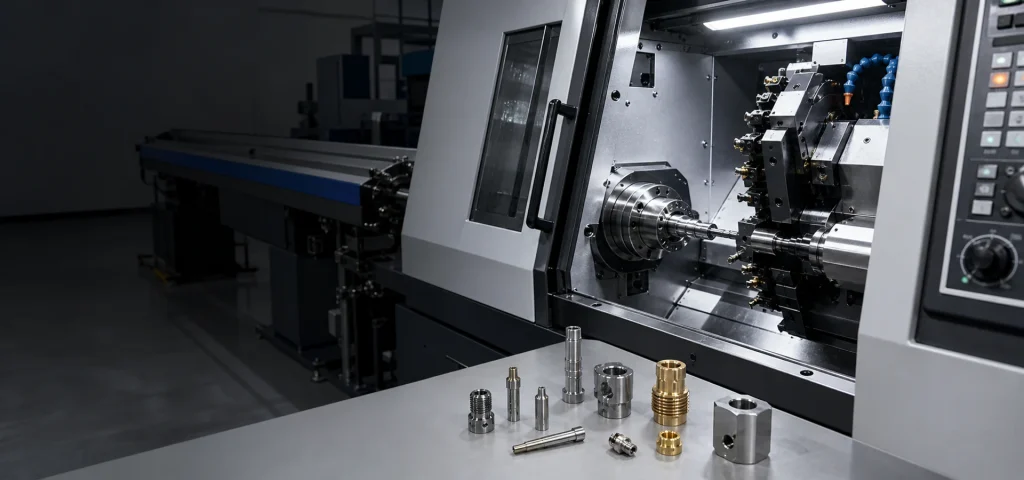
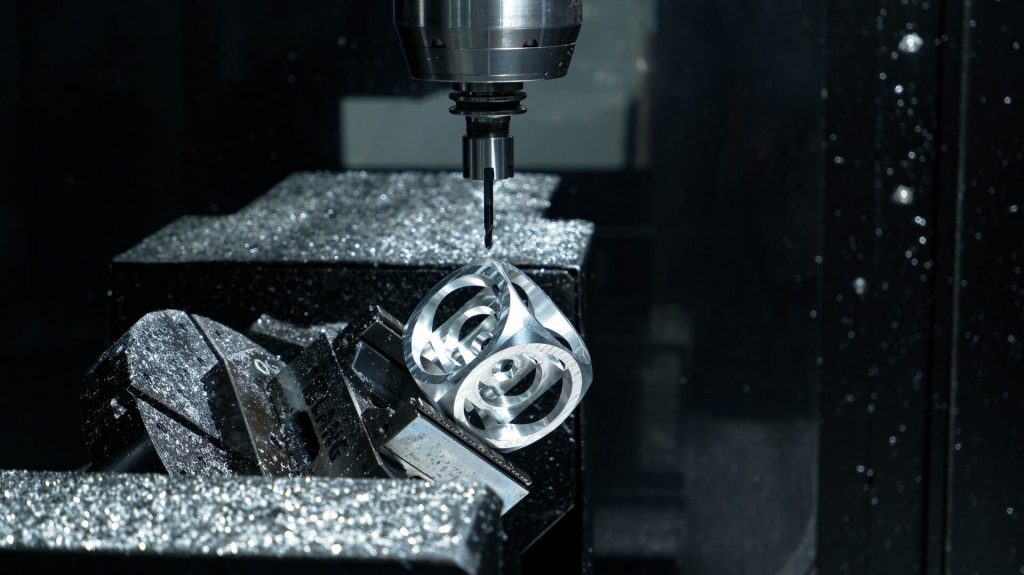
Then match process. Pocketed covers need CNC milling. Shafts need CNC turning. Compound faces may need 5-axis CNC machining. If they say yes to all three with no setup story, ask which cell would run this part.
Identity on paper should match identity on video. If the quote is in a brand English name and the business license is a different Chinese legal name, write both on your vendor record. You are not doing a legal audit in this article. You are making sure the PO pays the mill you saw. Mismatch is a question, not an automatic fail, until they explain it.
Process family is a file question. Send the STEP and ask: mill, turn, or 5-axis, and how many setups. “We can do all CNC” is not a vet. A 6061 housing with deep pockets is a mill vet. A Ø12 x 200 mm 304 shaft is a turning vet. Mixing those in one “can you make this” email without naming the cell produces a supplier who is theoretically capable and practically the wrong queue.
Do not treat Alibaba stars, paid ads, or a 5-axis photo as identity. Those are lead sources. The vet starts when a legal name and a cell story exist.
How to vet a Chinese CNC supplier on the drawing pack
How to vet a Chinese CNC supplier on engineering is to send a real pack and score the reply. Use the same STEP plus PDF you would send to production, including ISO 2768 vs boxed tolerances.
- Send STEP plus PDF at one revision (CAD pack). Done when they echo part number and Rev in writing.
- Require DFM on three risk features (email mark-up or screenshot). Done when L/D, corner radii, or finish masking is discussed.
- Require a process family (mill / turn / 5-axis). Done when setup count or machine family is named.
- Require inspection method per critical (CMM vs hand tools). Done when the quote lists the tool, not “100% QC.”
- Require material path (grade, temper, cert). Done when 6061-T6 or 304/304L is repeated, and you know who keeps the mill cert.
- Buy a sample on that revision. Done when packing list, burrs, and balloons match the PDF you sent.
A common failure is vetting on a leftover bracket from another customer. That proves a spindle. It does not prove they can read your datum scheme.
ASME Y14.5-2018 is the usual US GD&T language. If they cannot parse a position frame, they are not vetted for that drawing. See ASME Y14.5. ISO 2768-1 (1989) still explains general tolerances when your sheet is sparse; name it via ISO 2768-1 so “standard tolerance” has a meaning.
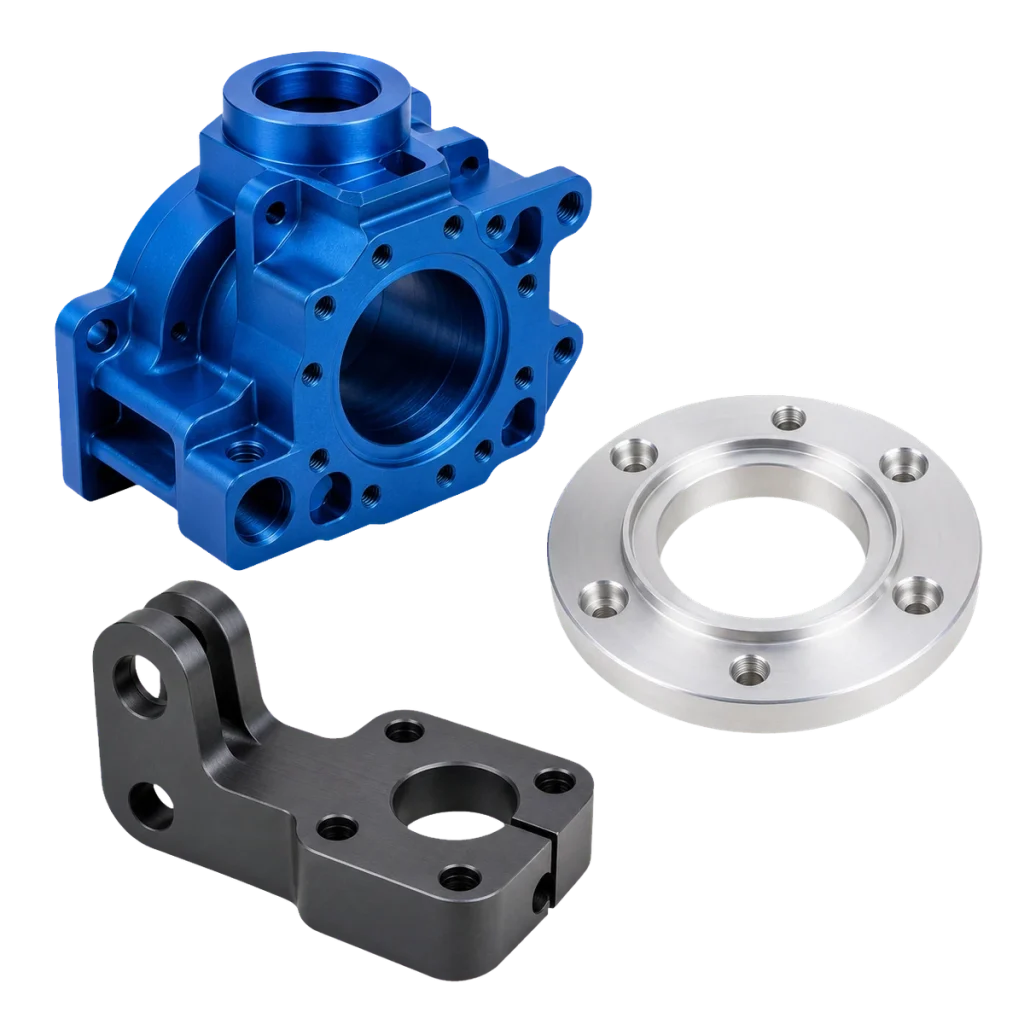
Custom CNC machining services should be describable as a route: receiving, program, cut, inspect, pack. If the supplier can only describe “precision,” keep asking.
File-control details in this step: name files PN-REV-C.step and PN-REV-C.pdf. Subject line includes the revision. Ask them not to forward the zip to an unnamed mill. If they need a sister shop, they must name it before you call them vetted. A silent forward is a new, unvetted supplier wearing the first supplier’s email.
Write the RFQ header so the engineering vet has commercial edges: qty 5 then 40, Type II or as-machined, CMM on which balloons, Incoterms 2020 term. A supplier who echoes Rev C but changes your 7075-T6 into “aluminum” has failed the material path before any chip is cut.
Do not send a dummy part to “see what happens” if you intend to judge GD&T skill. Send the real datums, or accept that you only vetted a simpler job.
Floor proof and quality paper that ties to the lot
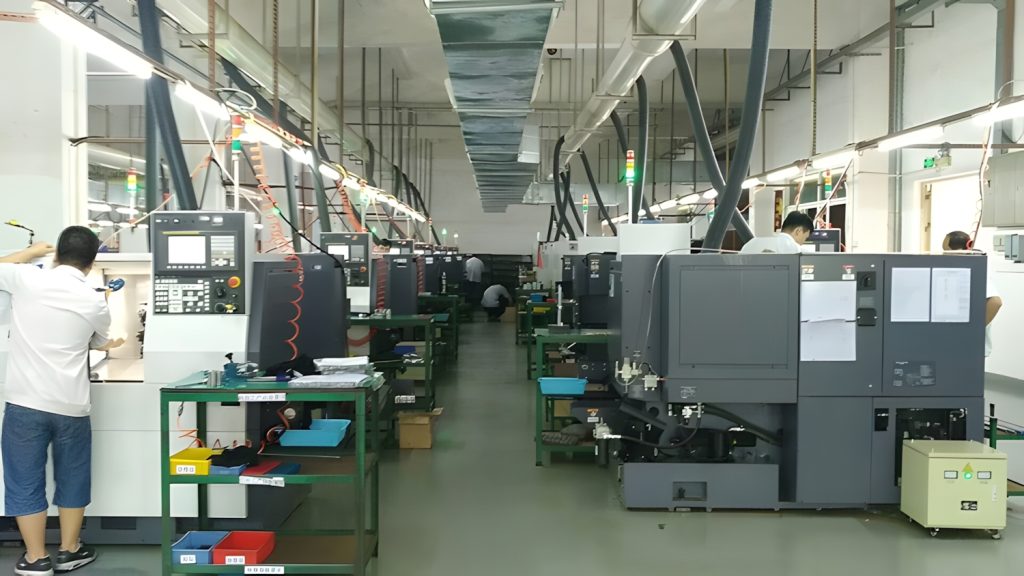
A live video of the machine, the vise or collet, and workholding for a similar size part is the minimum floor proof. Ask them to show a readout or job traveler if they use one. A lobby tour proves little.
Material certs must match the heat or lot on the bar, cut to the job. A generic 6061 PDF from a distributor archive is not a vet of your lot. Inspection reports must balloon your criticals. A five-line “all OK” sheet is not a first article.
Incoterms 2020 labels the freight wrapper while you vet landed cost. Use Incoterms 2020 (ICC, 2020) so EXW and DDP quotes are not treated as equals.
| Vet item | Pass | Fail | Best for | Watch-out |
|---|---|---|---|---|
| Legal name / mill | Matches PO and video | Brand name only | First RFQ | Trader hiding the plant |
| DFM reply | Marked L/D, radii, finish | Price, no questions | GD&T parts | Polite silence |
| Inspection | Tool named per critical | “100% inspected” | Fits, position | Calipers on GD&T |
| Material | Grade plus cert path | “Aluminum” | 7075, 304, 4140 | Alloy swap |
| Sample | Your Rev C, your report | Cousin part | New supplier | Different finish |
| Subcontract | Written, approved | Silent second mill | Repeat jobs | Process drift |
| File echo | Quote names Rev C | Quote names the product nickname | Every job | Old STEP still live |
Bottom line: a supplier is vetted when the Pass column is true on your part, not on their catalog.
Quality paper is file control for metal. The mill cert should reference a heat number you can find on the bar tag or on a photo of the stock. The CMM report should reference your part number and revision. If the report is titled with their job number only, ask them to add your PN and Rev. You will need that when incoming QA at your dock compares boxes.
Do not invent a certificate requirement the shop did not discuss. If your quality system needs a mill cert, write it on the RFQ. If it needs a named ISO management system, ask and verify to the legal name. This page does not claim YXT or any unnamed shop holds a given certificate. A PDF stamp is not a substitute for balloons on your drawing.
Floor video red flags: empty showroom, no chips, no vise, or a machine envelope that cannot fit your 400 mm plate. Ask them to pan to the table and a scale (a hand, a 1-2-3 block, a part outline). You are not collecting cinema. You are tying a cell to a quote.
How to vet a Chinese CNC supplier after the sample
How to vet a Chinese CNC supplier after the sample is to treat the box as evidence. Measure the three criticals yourself or at your receiving CMM. Check threads with the gage you will use in assembly. Check cosmetic faces under the light you use, not a phone flash.
If the report skipped the hard features, the supplier taught you how production will be inspected. Fail the vet or make the next PO require those balloons.
Do not jump from a 2-piece sample to a 500-piece lot on a new revision. Bump the revision, bump the first article.
Tie the carton to the zip. Packing list: part number, Rev C, qty. If the list says “aluminum parts” and a shop job number, you cannot close the vet. Photos of the box help. They do not replace the list.
Check burrs against the note. Check anodize rack marks if Type II was in the RFQ. Check whether masked threads still gauge. If you specified sizes after coat, measure after coat. A sample that was shipped raw “to save time” while production will be coated is not a production sample.
Setup scatter matters. Two to five pieces show whether one lucky cut hid a vise shift. One piece can pass. Three pieces tell you more. You are still not running a capability study in this vet. You are seeing whether the supplier inspects the way they promised.
If you must use small-batch CNC quantities next, keep the same revision discipline. A passed sample on Rev C does not vet Rev D. Hole moves, program moves, first article moves.
Worked RFQ: score a new mill in one week
Here is a compact vet on one housing so how to vet a Chinese CNC supplier is a scored pack, not a mood.
Monday send:
- Zip:
HSG-12-REV-C.step+HSG-12-REV-C.pdf - 6061-T6, qty 4 sample / 40 production, Type II black, mask 4x M4
- Criticals: two Ø10 H7 after coat, position Ø0.05 to A-B-C, seal Ra 1.6
- Open sizes ISO 2768-m
- Ask: legal name, mill or trader, process family, CMM or not, mill cert path, echo Rev C
Wednesday pass reply:
- Legal mill name, Dongguan
- 3-axis, two setups
- DFM: pocket R3 OK; asks after-coat on H7; flags 1.6 mm floor
- Quote header: HSG-12 Rev C
- Inspection: CMM on H7 and position
- Sample: 4 pcs this revision, mill cert with heat
Wednesday fail reply:
- Price, 8 days, DDP, “ISO” mentioned with no legal-name match, no revision, no tool
Thursday: if pass shape, pay the sample. Do not award 40 pcs yet.
Next week: measure H7 and position at receiving. Match balloons. If the report omitted position, the mill failed the quality vet even if H7 is in. Either stop or rewrite the PO to require those lines before the 40.
Scoring sheet (keep next to the zip):
| Gate | Evidence | Pass? |
|---|---|---|
| Identity | Legal name = PO | |
| Process | Mill, 2 setups | |
| Files | Echo HSG-12 Rev C | |
| DFM | Floor + H7 after coat | |
| Inspect | CMM named | |
| Material | 6061-T6 + cert path | |
| Sample | 4 pcs, same rev, balloons | |
| Subcontract | None or named |
Bottom line: seven yeses and a measured sample. Anything less is a lead, not a supplier.
Contact the factory desk with that same pack if you want a Dongguan mill to run the gates in public, in the thread, where you can score them.
Award only after the four filters line up
A Chinese CNC supplier is ready for a production PO when identity, DFM, inspection method, and sample line up on the same revision. If two suppliers pass, pick the one whose engineer marked the PDF. Price is the last column, rebuilt with the same scope.
If the supplier passed, send the production pack on the contact form with the same revision discipline you used to vet them.
Write the PO as a file-control document: PN, Rev, material, finish, balloons, Incoterms 2020 term, mill name, no silent subcontract. Purchasing should not be allowed to change mills to save a sliver after the sample. That change restarts the vet.
If the supplier failed one filter, you can still use them on a simpler job that does not need that filter. A mill that cannot parse position is not vetted for your GD&T housing. They might still be fine for an ISO 2768 bracket with caliper inspection. Do not pretend the fail did not happen. Scope the next RFQ to what they proved.
FAQ
How to vet a Chinese CNC supplier if I cannot travel?
Use legal name, machine video, DFM on your files, named inspection, and a paid sample on your revision. Skip the supplier who will not do those five. File control still applies: one zip, one echo, packing list with that revision. A video of the wrong cell is not travel-saving. Ask them to show the table size and the vise that would hold your envelope. If your quality system later requires a visit, treat the remote vet as a prototype gate, not a forever approval. The remote pack is still more evidence than a brochure.
Are Alibaba stars a vet of a CNC shop?
No. Stars measure message speed and transaction counts, not datum control. Use them as a lead source, then run this checklist. A high-star trader can still hide the mill. A low-star new mill can still mark L/D correctly. Stars do not echo Rev C. Stars do not balloon a position frame. After you have a lead, identity, DFM, inspection, and sample are the vet. If a platform badge and a drawing pack disagree, believe the pack.
Should I ask for ISO 9001 when I vet a Chinese CNC supplier?
Ask only if your quality system requires it, then verify the certificate to the legal name. A PDF stamp is not a substitute for a sample report on your drawing. This article does not invent who holds which certificate. Many capable mills run inspection without that paperwork, and some certificates do not match the brand on the email. If you require a named management system, make it a documented ask, then still run DFM and sample gates. Paper without balloons is not a CMM.
What is a red flag on a China CNC video tour?
A tour that never shows a vise, a readout, or a traveler, or a shop that looks unrelated to the quote. Ask for the cell that would run your part. Other flags: a 5-axis showpiece when your part is a 3-axis plate, a lathe shop quoting a large housing, or a video that is clearly a stock clip. Ask them to write today’s date on a notepad in the frame if you worry the clip is old. You are tying floor to file, not collecting marketing.
How many sample pieces do I need to vet the supplier?
Enough to see setup scatter: often 2 to 5 for a prototype process. One piece can hide a lucky cut. Production sampling is a separate plan. If the part is expensive, two pieces plus a complete ballooned report may be the compromise. If the part is cheap and cosmetic, five pieces under your light will tell you more than one CMM printout. Tie every piece to Rev C on the packing list. Mixed revisions in one box fail the vet.
Can I vet only by price and lead time?
No. Price and lead time are outputs of unstated assumptions. Vet finish, CMM, certs, and Incoterm first. Rebuild the quote with the same revision, material, inspection, and freight term. After that rebuild, price can rank two suppliers who both passed. Before that rebuild, a 7-day DDP number is not comparable to a 12-day EXW number that includes CMM. File control makes the rebuild possible. Without a named revision, you do not even know which STEP they priced.
How to vet a Chinese CNC supplier is identity, DFM, inspection, and a sample on your revision. When you are ready to run that sequence with a Dongguan factory desk, send STEP, PDF, material, and quantity via YXT CNC contact and score the reply the same way you would score any other mill.