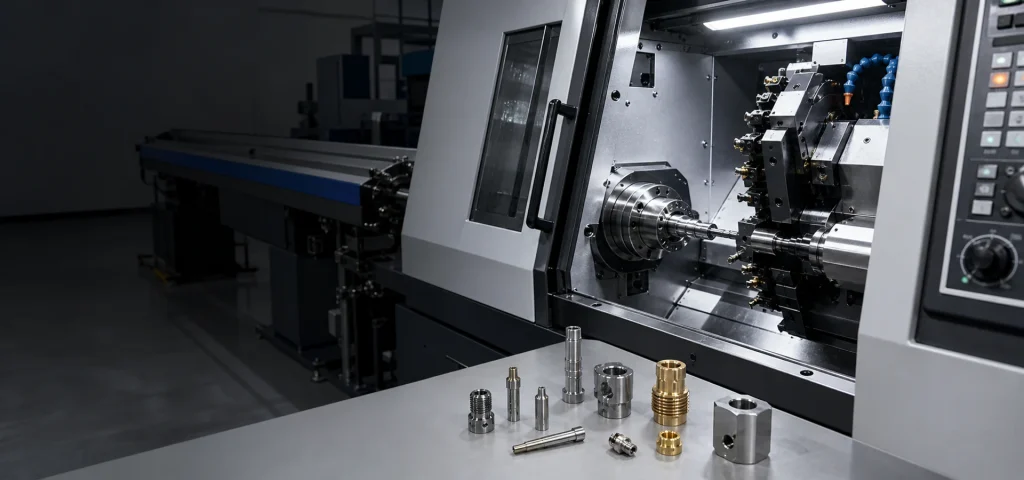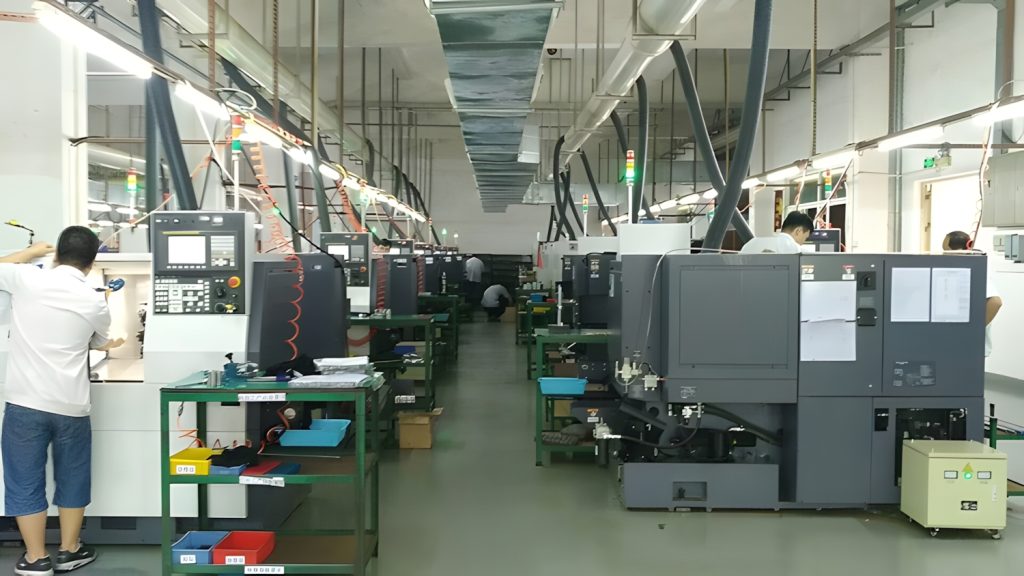
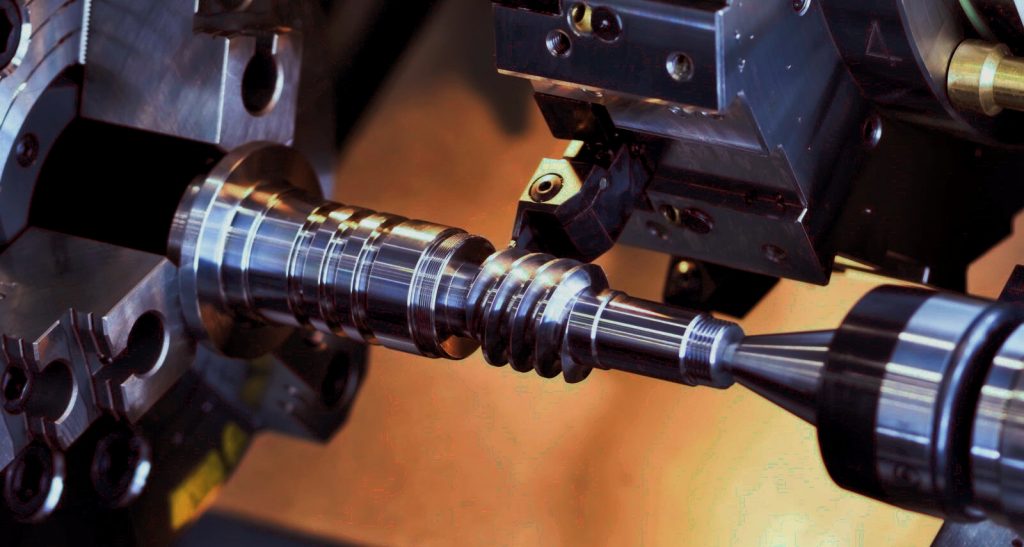
CNC turning vs Swiss for custom shafts is a workholding decision on a round axis, not a milling decision. Quote conventional CNC turning when the shaft is chucked or colleted on a shoulder, the OD is large, or you start from a sawn blank in 4140, 304, or 6061-T6. Quote Swiss when the shaft is small-diameter bar, slender, and needs journals, threads, and back-end work in one bar-fed cycle. ASME Y14.5-2018 datums should sit on the bearing diameters you assemble. ISO 2768-1 (1989) can cover non-critical lengths. If the shaft is a one-off with a bulky flange, stay on the chuck lathe.
You are sending custom shaft drawings to a Dongguan shop and need one process name on the RFQ. This page is only about shafts: stepped ODs, journals, snap-ring grooves, and end threads. It is not a general Swiss screening list for pins and screws.
Prepare STEP plus PDF. Name material, quantity, and which diameters are bearing or seal fits.
Key takeaways
- Chuck or collet turning is the default for large, flanged, or blank-based custom shafts.
- Swiss is the default when the shaft stays on small bar, stays slender, and needs both-end features without a second clamp.
- Put runout or position on journals relative to a datum diameter.
- Prototype quantity does not force a chuck lathe. Geometry and stock form do.
- If the OD is already past typical Swiss bar, do not force a Swiss quote.
CNC turning vs Swiss for custom shafts at a glance
CNC turning vs Swiss for custom shafts is settled by diameter, how the bar is supported, and whether a flange needs a chuck.
| Factor | Conventional CNC turning | Swiss-type turning | Best for | Watch-out |
|---|---|---|---|---|
| Support | Chuck or collet; tailstock if needed | Guide bushing near the cut | Short, stiff shafts vs slender bar shafts | A long small shaft in a chuck chatters |
| Typical shaft | Stepped OD with a bulky shoulder or flange | Small bar, many diameters, both ends live | Motor shafts vs instrument shafts | Forcing Swiss on a 60 mm flange wastes the cell |
| Stock | Bar, tube, or a sawn blank | Bar through the bushing | Blank-based one-offs vs bar-fed customs | Guide-bushing work wants consistent bar diameter |
| Back-end work | Reclamp, sub-spindle, or a second op | Main and sub-spindle in one cycle | Simple one-end shafts vs both-end journals | A second clamp can move runout |
| Quantity | Flexible for 1 to mid lots | Strong after the bar process is approved | Mixed sizes vs repeat bar shafts | Swiss setup is the wrong fight for a single fat shaft |
| L/D | Tailstock and rest fight deflection | Bushing keeps stick-out short | Stiff 4140 drives vs Ø6–12 mm pins | High L/D on large bar is still a chuck problem |
Bottom line: quote the chuck lathe when the custom shaft is stiff or blank-based; quote Swiss when it is small bar with both-end work that must stay coaxial.
If the shaft looks like a chuck job, start with CNC turning services. If it looks like slender bar, start with Swiss CNC machining.
A later live-tool note does not flip this table. Flats and cross-holes can exist on either cell. The support method still comes first.
When a chuck lathe is the right shaft cell
A chuck or collet lathe is the right cell when you can grip a shoulder, a flange, or a large diameter and still reach the journals.
Typical examples: a 4140 drive shaft with a 50 mm flange, a 6061 roller with a thick hub, or a 304 coupling blank sawn from plate then turned. Tailstock or a steady rest handles extra length. A keyway or wrench flats do not by themselves pick Swiss. Those features pick live tools or a later mill step on the cell you already chose.
ASME Y14.5-2018 is the usual language for the datum axis on those journals (ASME Y14.5). Put datum A on the diameter that locates in the bearing, not on a turned relief that never sees a housing.
Heat treat does not pick the cell either. 4140 that must be quenched may need grind stock after heat treat. Call the process on the geometry, then plan heat treat as a route.
Bar diameter on a chuck job is a grip and saw-cut story. Ø40 mm 4140 bar for a Ø36 mm body is normal. A sawn blank from plate is also normal when the flange is wider than any bar you want to buy for a one-off. Write the stock form. If the shop has to guess between Ø60 mm bar and a flame-cut blank, the quote will stall on material, not on Swiss versus chuck.
L/D on a chuck shaft is finished stick-out over the thin diameter. A Ø20 mm × 70 mm span past the chuck is 3.5:1 and often wants a tailstock. A Ø12 mm × 90 mm span is 7.5:1 and may want a rest or a redesigned step. Allow a center hole if the end can take one. Forbidding both a center and a rest on a high L/D chuck shaft is how you get taper and a fight at first article.
Runout on a chuck shaft is usually indicator work on the journals to datum A. The risk is the second clamp. If both ends must run true and you reclamp, say so, or allow a sub-spindle. Do not specify 0.02 mm total runout on a diameter you can only reach after flipping the part in a soft jaw with no pickup diameter.
Live tooling on the chuck lathe covers the mill features that still belong on this cell: wrench flats, a woodruff keyway, a cross-hole for a pin. If those features are small and must clock to the journal, keep them on mill-turn. If the mill work is a deep pocket on a hub, split to a mill after turning. That split is a setup question, not a reason to send a 50 mm flange to Swiss.
When Swiss is the right cell for a custom shaft
Swiss is the right cell when the custom shaft is still bar, the cut stays next to a guide bushing, and both ends need threads, grooves, or a second journal without reclamping.
Think 303 or 316L instrument shafts, slender 6061 transfer shafts, and small 17-4 PH parts that have become stepped shafts. The headstock feeds. The bushing supports. Front and back tools can finish the part in one cycle.
Bar diameter and straightness matter. If the drawing needs a special oversize bar for the largest journal, say so. ISO 2768-1 (1989) remains useful for non-critical lengths on either route (ISO 2768-1). Bearing fits still need a limit and a surface such as Ra 1.6.
A planning picture: Ø8 mm drawn 303 bar, finished journals at Ø6.5 mm and Ø7.2 mm, overall length 72 mm, M5 × 0.8-6g on both ends, a 1.1 mm snap-ring groove, circular runout 0.02 mm on the journals. L/D on that thin span is high if you tried to chuck it. In Swiss, the bushing keeps the unsupported cut short. That is the point of the cell.
Swiss still wants a real bar size. The largest finished diameter plus cutoff and any turning stock has to fit the machine’s bar envelope. If the largest step is Ø16 mm, you need bar at or above that size, and the bushing has to run that bar. If the largest step is Ø32 mm with a tiny stem, you are back on a chuck lathe. Do not “Swiss the stem” and ignore the head.
Ground bar versus drawn bar is a bushing conversation. Some guide bushings run well on consistent drawn bar. Some jobs want ground bar for diameter and straightness. If you require ground bar, write it. If you do not know, give finished sizes and let the shop pick a standard bar, then approve that bar on the quote.
Both-end features are why Swiss beats a second clamp. Threads on both ends, a back-end bore, a groove behind the cutoff, a small hex: the sub-spindle takes the part and finishes it while the axis is still the same bar. That is how you protect runout without a pickup op. If the custom shaft only has features on the chucked end and the other end is a simple face, Swiss is optional, not required.
Do not send implant-style or regulated product types on the RFQ unless you have already asked the shop whether they support that product. This page is industrial custom shafts.
L/D, bar diameter, and runout on custom shafts
L/D, bar diameter, and runout are the three numbers that usually settle CNC turning vs Swiss for custom shafts after you already know the part is round.
Compute L/D on the thin span, not on the flange. A 10 mm journal running 85 mm is 8.5:1. On a chuck lathe that ratio wants a tailstock, a rest, or a geometry change. On Swiss, the same ratio is often routine because the bushing sits next to the cut. If the diameter is 28 mm and the length is 90 mm, L/D is only about 3.2:1 and a chuck plus tailstock is the simpler cell. High L/D does not automatically mean Swiss. Small diameter plus high L/D plus bar stock does.
Bar diameter is the hard stop. Sliding-headstock machines are built around a bar envelope. A custom shaft whose largest turned diameter sits well above that envelope is a chuck job, even if the small end looks like a pin. Write the largest finished OD on the RFQ. If you want the shop to choose bar, say “largest OD ØX, shop to select bar.” If you already buy Ø12 mm 316L bar and the largest journal is Ø11.4 mm, say that. Inconsistent or oversized bar fights the bushing and shows up as diameter variation and poor bushing life, which then shows up as runout.
Runout is the inspection language. Prefer circular runout or total runout to a datum journal under ASME Y14.5-2018. Old concentricity notes are ambiguous. Name the method: indicator on V-block or centers, or CMM if the geometry forces it. NIST manufacturing metrology publications in 2024 still treat the measurement method as planned work, not an afterthought.
A chuck lathe can hold runout when the grip and tailstock are planned around the datum journals. It loses runout when you reclamp between ends with no pickup. Swiss holds runout by not reclamping. If your print asks for 0.02 mm runout on two journals at opposite ends, Swiss is the cleaner process when the bar diameter allows it. If the same print sits on a Ø45 mm flanged shaft, stay on the chuck lathe and allow a sub-spindle or a grind.
ISO 2768-m will not save a tapered journal. If straightness or runout matters, put the control on the drawing. A general size class is for non-critical lengths.
Live tooling versus Swiss on a shaft RFQ
Live tooling versus Swiss on a shaft RFQ is a common mix-up. Live tooling adds mill features. Swiss adds guide-bushing support. You can have live tools on a Swiss machine. You can have live tools on a chuck mill-turn. One does not replace the other.
Use live tooling on the chuck lathe when the shaft is already a chuck job and you need flats, a keyway, or a cross-hole that must clock to the journal. Example: Ø24 mm × 80 mm 4140 shaft, Ø30 mm shoulder, 6 mm woodruff keyway, circular runout 0.03 mm on the journals. Primary cell: chuck turning with live tools. Not Swiss: the shoulder and bar size are chuck territory. The keyway is not a reason to change workholding.
Use Swiss when the shaft is small bar and slender, even if the mill features are tiny. Example: Ø6 mm × 55 mm 303 shaft, both-end M4 threads, Ø2 mm cross-hole, L/D high if chucked. The cross-hole is live-tool work inside Swiss. The reason you picked Swiss is still the bushing, not the hole.
Do not send a chuck shaft to Swiss “for better flats.” Do not send a Swiss shaft to a mill for one cross-hole if driven tools can reach it. If the mill feature is a deep pocket or a large hex that the turret cannot cut rigidly, split to a mill after turning, on whichever turning cell you already chose.
If compound mill surfaces sit on a round blank, that is a mill or 5-axis question after the OD is turned. 5-axis CNC machining services can own those surfaces. They do not pick Swiss versus chuck.
For mixed prototype and production shafts, small batch CNC machining services can sit next to the process page. Keep this RFQ’s process line to one cell.
CNC turning vs Swiss for custom shafts: decision tree and worked RFQ
CNC turning vs Swiss for custom shafts should close with one named cell.
- If the largest turned diameter is well above typical sliding-headstock bar, quote conventional turning.
- If the shaft starts as a sawn blank, a casting, or a flanged forging, quote conventional turning.
- If the shaft is small bar, slender, and needs both-end journals or threads in one hold, quote Swiss.
- If you need five prototype shafts with mixed diameters and bulky steps, quote conventional turning even if a later lot could be Swiss.
- If you cannot name the cell, send the drawing and ask the shop to pick chuck versus guide bushing.
Name the material and temper, the quantity, and which diameters are fits. Show thread class and groove width. If the shaft will ship internationally, state the Incoterms 2020 term you want on the commercial documents (Incoterms 2020).
Worked RFQ 1, chuck route. Part: custom 4140 drive shaft. Flange Ø52 mm × 8 mm, body Ø28 mm, journals Ø25 mm h6, overall length 140 mm, M16 × 2-6g on the small end, 6 mm keyway, circular runout 0.03 mm journals to datum A (journal), Ra 1.6 on journals. Stock: sawn blank or Ø55 mm bar. L/D on the body past a chuck is moderate; plan tailstock. Live-tool the keyway. Heat treat and grind stock if the print requires it after quench. Qty 12. Cover note: “Chuck turning primary. Not Swiss (flange Ø52). Tailstock allowed. Live-tool keyway. Runout 0.03 mm indicator to datum A.”
Worked RFQ 2, Swiss route. Part: custom 303 instrument shaft. Largest OD Ø7.8 mm, journals Ø6.00 / Ø6.50, length 68 mm, M5 threads both ends, 1.15 mm groove, Ø2.4 mm cross-hole, circular runout 0.02 mm. Stock: Ø8 mm bar, shop to confirm ground versus drawn. L/D would chatter in a chuck. Qty 200 after a 10-piece first article. Cover note: “Swiss primary. Bar Ø8. Both-end threads in one cycle. Cross-hole live-tool on Swiss. Runout 0.02 mm. Cutoff pip not allowed.”
You are done when each shaft has one cell, a bar or blank size, an L/D support note, and a runout method. Do not put both worked examples on one line item.
For mixed process lists, custom CNC machining services can carry several part numbers. Each shaft still needs its own cell name.
FAQ
Is Swiss always better for a long custom shaft?
No. Length only helps Swiss when the diameter is small enough for a guide bushing and the stock is bar. A long 40 mm 4140 shaft still belongs on a chuck lathe with a tailstock. L/D on a large bar is a deflection problem you solve with a center or a rest, not with a sliding headstock. Swiss wins on a long Ø6–12 mm bar shaft because the bushing shortens the unsupported cut. Measure largest OD, thin-span L/D, and stock form before you treat “long” as a Swiss keyword.
Can a chuck lathe hold runout on a custom shaft?
Yes, when the grip and the tailstock are planned around the datum journals. Reclamping between ends is the usual runout risk. Put circular or total runout on the drawing, name indicator versus CMM, and allow a sub-spindle if both ends must run true. A chuck lathe will not magically hold 0.01 mm runout on a diameter you only reach after a soft-jaw flip with no pickup. If the bar is small and both ends are live, Swiss avoids that reclamp. If the shaft is flanged, stay on the chuck and plan the clamp.
Do prototype custom shafts have to be chuck turned?
No. A small slender prototype from bar can still be a Swiss first article. A bulky flanged prototype should stay on the chuck lathe. Quantity does not pick the bushing. Geometry and bar diameter do. Five pieces of Ø8 mm 316L with both-end threads is a Swiss prototype. Five pieces of a Ø50 mm 6061 roller is a chuck prototype. Mixing those on one “prototype shafts” RFQ without cell names is how quotes stall.
What bar size should I specify for Swiss shafts?
Specify the finished largest journal plus any stock the shop needs for the bushing and the cutoff. If you do not know the extra, give the finished sizes and let the shop pick a standard bar. Write straightness or ground bar only if the function needs it. Inconsistent bar diameter shows up as bushing play and then as OD and runout variation. For chuck shafts, bar size is a grip and saw story: large enough for the flange, not a bushing fit.
Should I call out concentricity on shaft journals?
Prefer runout or position to a datum diameter under ASME Y14.5-2018. If an older drawing still says concentricity, tell the shop how you want it inspected. Most rotating journals want circular runout, checked with an indicator on a V-block or centers. Concentricity in older ASME practice targeted derived median points and often became a CMM argument. Put datum A on the locating journal. Do not datum a groove or a thread major.
Can live tooling replace Swiss on a small shaft?
Live tooling adds flats and holes. It does not replace guide-bushing support on a slender bar. An Ø8 mm × 70 mm shaft with a cross-hole still chatters in a chuck even if the turret has a driven drill. Swiss plus live tools is the usual combination: bushing for L/D, driven tool for the hole. On a stiff chuck shaft, live tooling is enough and Swiss is the wrong cell. Name support first, mill features second.
Once CNC turning vs Swiss for custom shafts is a named cell, send the STEP, PDF, material, quantity, and journal datums through the contact page for a shaft quote. Put L/D, bar diameter, and runout method in the notes, and say whether live tools stay on that cell. Link the RFQ to CNC turning or Swiss CNC machining so the reviewer opens the right cell.