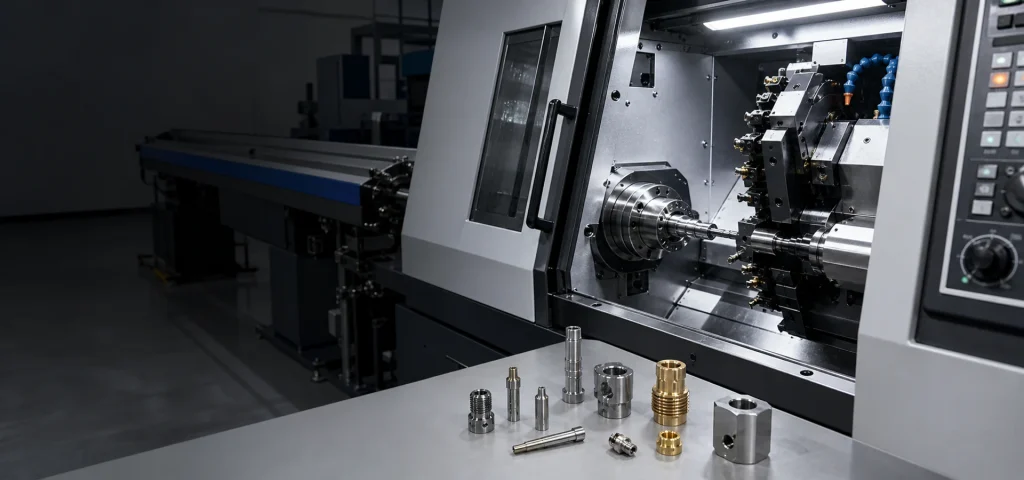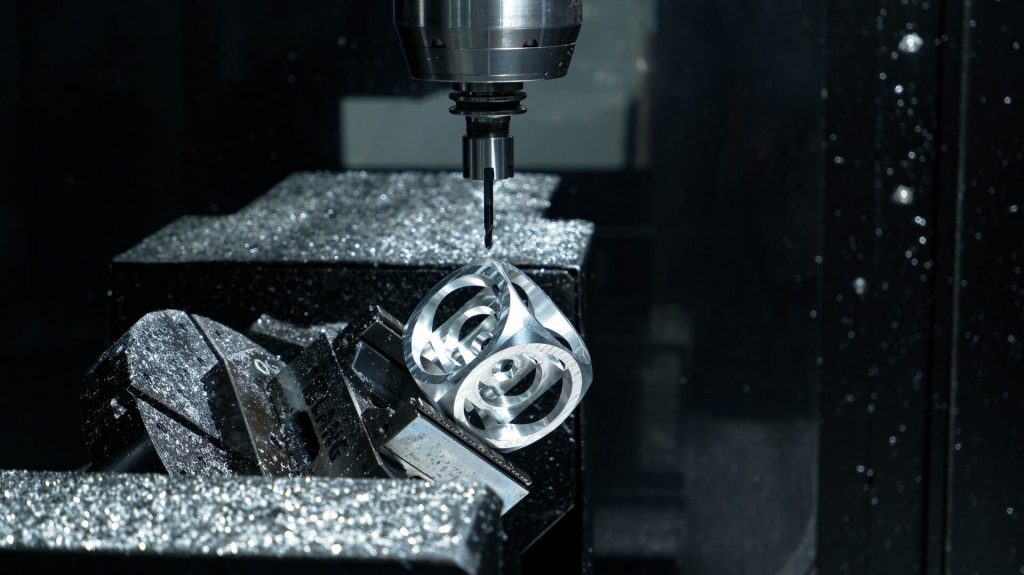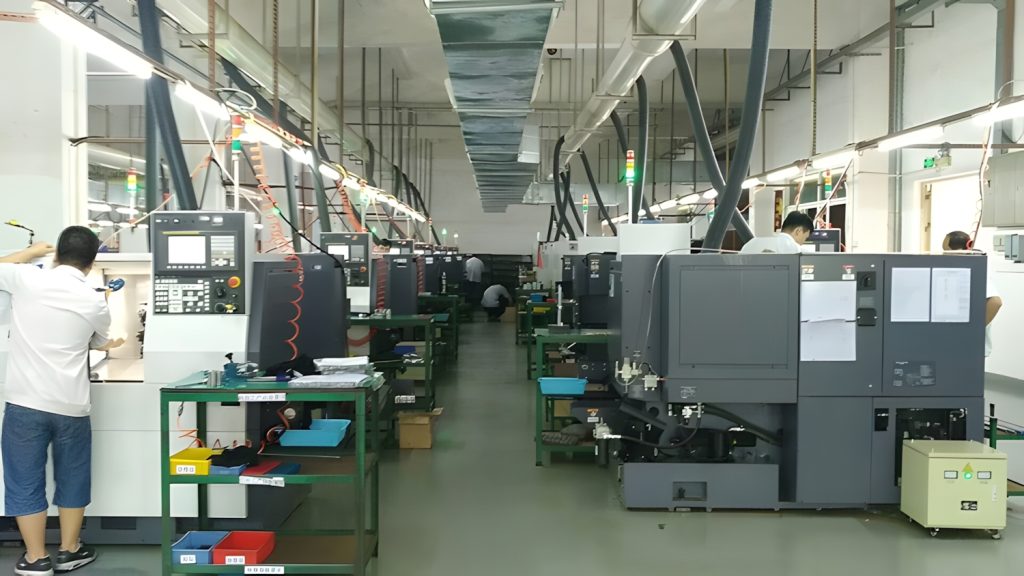
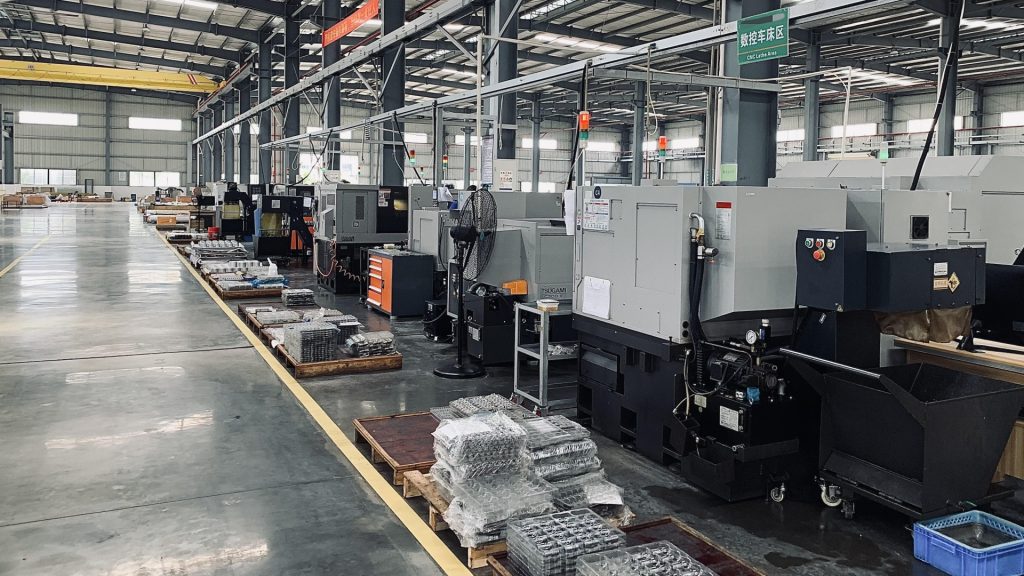
Factory direct CNC machining vs trading company is a control choice. Factory direct means the mill that will cut 6061-T6 or 304 also answers L/D, Ra 3.2, and CMM questions on your STEP plus PDF. A trading company sits between you and one or more shops. That can help when you need machining plus sheet metal plus a finish the mill does not run in-house. It hurts when DFM is delayed, the mill is unnamed, and the sample did not come from the production cutter. For a drawing-driven mill, turn, or 5-axis part, start factory direct. Use a trader only if they name the plant, pass through marked-up PDFs, and quote Incoterms 2020 terms you can compare. Pick on who can change a toolpath when Rev C hits, not on English fluency alone.
US and EU buyers get both kinds of emails from China. One is a plant in Dongguan with vises on the floor. One is an office that “has factories.” Both may send a quote tomorrow. Only one can stop a spindle when your hole size changes.
This comparison is for RFQs that already have a drawing. Some traders run real project desks. Many do not. File control is how you tell them apart: who holds the live STEP, who echoes Rev C, and who can mark the PDF the same day the mill sees it.
Key takeaways
- If one mill can cut the part, factory direct is the default.
- A trader is useful when they name the mill and own a multi-process route you cannot manage.
- Unnamed “partner factories” fail DFM and revision control.
- Compare EXW vs DDP using Incoterms 2020, not a door-to-door slogan.
- Award the party that can mark the PDF the same day the mill sees it.
Factory direct CNC machining vs trading company at a glance
Factory direct CNC machining vs trading company should be scored before you open the price column. The table already states the usual winner for a CNC-only drawing.
| Factor | Factory direct | Trading company | Best for | Watch-out |
|---|---|---|---|---|
| Who cuts metal | Named mill / lathe cell | Often unnamed “partners” | Mill, turn, 5-axis parts | Trader may switch mills mid-lot |
| DFM speed | Programmer can mark the PDF | Extra hop, answers soften | Tight GD&T, Ra 1.6 faces | Lost-in-translation radii |
| Revision control | One folder, one Rev C | Easy to quote an old STEP | Repeat small-batch CNC | Two mills, two interpretations |
| Multi-process bundle | You coordinate finish or EDM | Trader can package | Machining plus sheet metal | Scope gaps in the package |
| Inspection story | CMM on that floor | Report from “the factory” | Position / profile | Whose CMM? |
| English | May be an engineer | Often a salesperson | Fast email | Fluency is not process control |
| Price shape | Machine time + finish + inspect | Machine time + margin + buffer | Clear drawings | Buffer hides missing CMM |
Bottom line: for a CNC drawing with datums, start factory direct. Bring a trader in only when the route is broader than one shop and the mill is still named in writing.
Read the table as a file-control test. Factory direct fails if the mill still forwards your zip to an unnamed sister shop. A trader passes if the mill name, city, and programmer DFM sit in the same thread as the quote. The label on the business card is not the score.
ASME Y14.5-2018 frames do not get easier because a salesperson is bilingual. The ASME Y14.5 language still needs a person who will mark L/D and position. Fluency moves email. It does not hold a vise.
What factory direct should mean on a China RFQ
Factory direct means you can name the city and the process family that will run your part. For YXT that is a Dongguan plant reviewing custom CNC machining from the drawing: mill, turn, 5-axis, and managed finishes when the spec is on the PDF.
You should still ask where anodize, heat treat, or wire EDM happen. “In-house” and “managed” are different. About YXT CNC states a drawing-driven route with specialist processes when needed. Demand that honesty from any mill.
If the files are ready, send a project inquiry to a factory desk and see whether DFM comes back without a middle hop.
Factory direct is also a folder rule. Your zip (PN-REV-C.step + PN-REV-C.pdf) should land with the estimator who talks to the programmer. The quote should echo the revision. The sample packing list should show the same revision. If those three documents disagree, you do not have factory direct. You have a game of telephone that happens to live inside one company.
Ask where CNC milling vs CNC turning vs 5-axis work will run for this file. A mill that prices a shaft as a 3-axis cube because the salesperson only thinks in plates is not “direct.” They are the wrong process family. Direct is not a virtue if the spindle is wrong.
Managed finish is still factory direct if the mill owns the NCR. Write on the RFQ: “Type II via your named anodize shop, mill remains responsible for after-coat H7.” If the mill will not name the finisher, you have the same problem as an unnamed CNC partner: you cannot audit the process when dye is on datum A.
Do not treat a WeChat video of “our workshop” as proof. Ask for the cell that matches your envelope. A housing 180 mm wide does not need a tour of a jewelry mill. Direct means this part, this vise, this revision.
When factory direct CNC machining vs trading company favors a trader
When factory direct CNC machining vs trading company favors a trader, the RFQ is a bundle you will not project-manage: machined bosses on a sheet-metal enclosure, mixed plastics and metals, or a finish mill that is not in the same group. Traders also help if you have no time to RFQ three process shops.
The pass condition does not change: mill name, DFM on your revision, sample from that mill, inspection method named. If they refuse to name the plant “for confidentiality,” you are buying a mailbox. Confidentiality can be handled with an NDA. It does not require hiding the cutter.
Traders sometimes hold inventory or do incoming inspection. Ask to see the incoming checklist, not a slogan.
A trader who passes file control looks like this in email:
- “CNC mill: [legal name], Dongguan. They will program BRKT-18 Rev C.”
- Attached: marked PDF from that mill on pocket L/D
- Sample: packing list shows that mill and Rev C
- Subcontract: “No mill switch without your written OK”
- Incoterms 2020 term labeled the same way the mill would label it
A trader who fails looks like this:
- “We have many factories, best price”
- DFM answers that never mention a tool diameter
- Sample from a “similar job”
- Quote in DDP with no mill, no revision, no CMM tool
Use the trader for logistics and multi-process scheduling. Do not use the trader as a substitute for a drawing pack. You still send STEP plus PDF at one revision (PN-REV-C.step and PN-REV-C.pdf). You still require the mill to echo that revision in the quote header. The trader’s job is to not lose the pack between your inbox and the vise. If they retype your notes into a new PDF, compare it to your drawing letter for letter. A paraphrased DFM note is how R3 becomes “sharp corners OK.”
If IP is sensitive, a trader multiplies mailboxes. Count the forwards before you award. Each extra inbox is another copy of the solid. Factory direct plus an NDA is usually fewer copies for a single CNC part.
Decision tree (do not stop at “it depends”)
Use this tree on the RFQ you have today.
- Is the part one CNC family (mill, turn, or 5-axis) with a STEP plus PDF? If yes, pick factory direct.
- If no, is the extra process specified on the drawing with a named spec? If yes, factory direct can still manage it, or a trader can bundle. Require the mill name either way.
- If the trader cannot name the mill, stop. Do not award.
- If IP is sensitive (new geometry, unreleased product), pick factory direct and limit who gets the STEP. A trader multiplies mailboxes.
- If you already have a mill that passed a sample, do not move the lot to an unnamed “partner” for a small cut.
NIST manufacturing resources (2026) treat a vendor switch without a new first article as a process change, whether the email came from a mill or a trader.
Incoterms 2020 is how you compare freight wrappers. The Incoterms 2020 rules (ICC, 2020) make EXW Dongguan and DDP your warehouse different quotes. Convert before you call one cheaper.
Work the tree with a real pack, not a hypothetical. BRKT-18 Rev C, 6061-T6, mill only, boxed slot, no sheet metal: step 1 says factory direct. Stop. Do not add a trader because their English is faster.
ENCL-04 Rev B, sheet-metal wrap plus four machined standoffs plus powder plus EMI gasket: step 2. A trader can win if they name the mill for the standoffs and the sheet shop for the wrap. If they name neither, step 3, stop.
Unreleased medical-adjacent geometry that is not an implant but is still secret: step 4. Factory direct, NDA, access list. This page is not legal advice and does not claim export-control status. If your company tagged the file as export-controlled, talk to your counsel before any China RFQ, mill or trader.
Worked RFQ: same drawing, two commercial faces
Run factory direct CNC machining vs trading company on one zip so price is not the first column.
Zip both parties receive:
SHAFT-09-REV-C.step/SHAFT-09-REV-C.pdf- 304/304L, Ø18 x 120 mm, live-tool cross hole, concentricity to datum A
- Qty 15, breaks 60
- As machined Ra 1.6 on bearing journals
- Incoterms 2020: quote EXW and FOB as separate lines
Factory-direct reply you can award:
- Echo: SHAFT-09 Rev C
- Process: CNC turning with live tooling, one mill op if needed
- DFM: cross-hole L/D OK; ask whether concentricity is to be inspected as runout on centers
- Inspection: micrometer journals, CMM or gage on concentricity as drawn
- Sample: 2 pcs Rev C from this lathe cell
- Legal mill name on the quote
Trader reply you can award (rare, but real):
- Echo: SHAFT-09 Rev C
- Named lathe shop, city, and “sample from that shop”
- Forwards the lathe DFM note, not a paraphrase
- Same EXW line itemized, plus their project fee on a second line
- Written no-switch clause
Trader reply you cannot award:
- “Stainless shaft, 10 days DDP, 100% QC”
- No revision, no mill, no instrument
Second comparison table for this RFQ:
| RFQ control | Factory direct pass | Trader pass | Fail either |
|---|---|---|---|
| File echo | Rev C in quote header | Rev C plus mill name | “Stainless shaft” |
| DFM path | Programmer mark-up | Forwarded mark-up, unedited | Sales adjectives |
| Sample origin | That lathe cell | Named lathe cell | Cousin part |
| Subcontract | Written if any | Banned unless approved | Silent second mill |
| Freight | EXW and FOB split | Same split, fee visible | DDP slogan only |
Bottom line: award the pass column. Do not award a trader for English if the mill is still unnamed. Do not award a mill for “direct” if they will not echo Rev C.
If both pass, pick the shorter DFM path. That is usually factory direct on a shaft. Keep the trader if you also need a kit they already run.
After you pick: lock the mill
Put the mill name on the PO, or put “no subcontract without written approval.” If you chose a trader, write the plant and the process. If you chose factory direct, still forbid silent subcontract of the critical setup.
First article stays tied to that plant. A new plant is a new sample. Rebuild both quotes as material, machine time, finish, inspect, pack, and freight term before you call one cheaper.
Lock files the same way. The PO should cite SHAFT-09 Rev C and the zip date. If Rev D appears, the trader or mill must echo again. A mill switch after award is a new vet, even if the commercial face did not change. NIST-style process-change thinking (NIST manufacturing resources, 2026) applies: new cutter, new first article.
Do not let purchasing “save 8 percent” by moving the 60-piece break to a partner mill the trader found after sample approval. The sample approved a cell. The PO should buy that cell.
FAQ
Is factory direct CNC machining vs trading company always won by the factory?
No. The factory wins when the part is CNC-led and the drawing is complete. A trader can win a multi-process bundle if the mill is named and DFM still reaches the cutter. Score control, not the label on the email signature. A factory that forwards your STEP to an unnamed sister shop is a trader in practice. A trader who attaches the mill’s marked PDF and ships the sample from that mill is a project desk. Use the decision tree on this RFQ. Do not keep a standing rule that “traders are always worse” if your part is a kit.
How do I tell a trading company from a factory on email?
Ask for the plant address, a video of the machine that will run your part, and a DFM mark-up from the programmer. A trader who cannot produce those is not a factory. Also ask them to echo the revision in the quote header. Mailbox traders talk about capacity and certifications in the abstract. They do not name a vise. Do not accept a stock video from a machine builder’s website. You want their floor, their workholding, your envelope. Legal name on the quote should match the mill you saw, or the trader should state both names.
Why are trader quotes sometimes lower?
They may omit inspection, use a cheaper mill, or switch material. Rebuild the scope before you celebrate. Put mill cert, CMM balloons, Type II mask, and Incoterms 2020 on both quotes. After that rebuild, a trader may still be lower because they aggregated volume or because they took a thinner margin. They may also be lower because 6061 was quoted as “aluminum” against your 7075-T6 print. File control catches that: the quote must repeat grade and revision. If it does not, the low number is incomplete.
Can I use a trader for prototypes and a factory for production?
You can, but you reset fixtures, programs, and first article. If the prototype mill passed, staying there is usually cheaper than a new plant you have not sampled. A trader-prototype plus factory-production split also splits file history. Rev C toolpaths do not travel. If you must split, send the same zip, require a new sample, and do not treat the trader’s report as the factory’s FAI. Write the mill name on the production PO. Do not assume “China CNC” is one process.
Does factory direct mean every finish is in-house?
No. Many mills manage anodize, plating, or heat treat. Direct means they own the route and the NCR, not that every tank is on site. Ask for the finisher name if the coating is cosmetic or if sizes apply after coat. Put mask and after-size notes on the PDF so the mill cannot blame a silent tank. Factory direct still fails if the mill will not own a dye stain on datum A. The commercial structure does not matter when nobody will sign the NCR.
What Incoterm should I demand when comparing factory and trader?
Demand a labeled Incoterms 2020 term (EXW, FOB, or DDP) on both quotes. Compare landed cost only after that label exists. A trader DDP number is not cheaper than a factory EXW number until you add freight, brokerage, and risk. Split the quote: machining, finish, inspect, pack, then freight term. If either party refuses to label the term, you cannot compare them. ICC Incoterms 2020 is the vocabulary. Door-to-door English is not.
For factory direct CNC machining vs trading company on a mill, turn, or 5-axis drawing, start with the mill that will cut the part. Send STEP, PDF, material, and quantity through a factory project inquiry and award only if DFM and the mill name come back in the same thread.