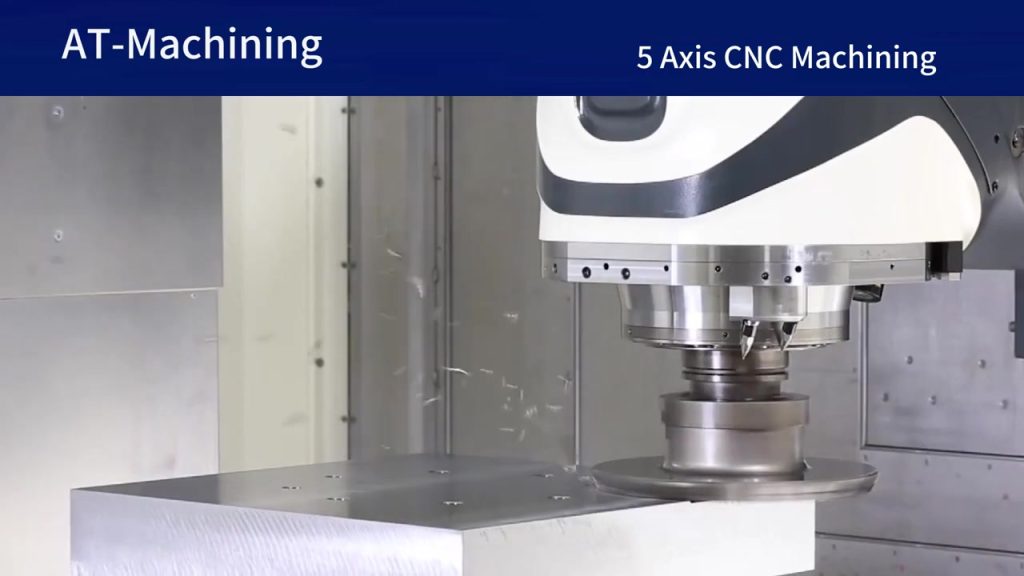
Compare 5-axis CNC machining cost vs 3-axis as a stack of hours, not as a higher machine sticker. 3-axis usually wins on prismatic plates, two-vise boxes, and lots large enough to amortize a fixture. 5-axis usually wins when extra clamps would break an ASME Y14.5 datum frame, when a second or third op needs a custom jig, or when scrap from a missed stack-up is expensive. Keep general sizes on ISO 2768-m, put tight true position only on assembly faces, and send STEP plus PDF so a Dongguan shop can count setups. Incoterms 2020 then decides who pays freight on that total, which is separate from mill mode.
Buyers who send RFQs to China often compare a 5-axis hourly rate to a 3-axis hourly rate and stop. That comparison is incomplete. Fixture build, handling, extra inspection after each clamp, and a missed datum are cost lines. The mill badge is only one of them.
If you already have a custom CNC machining quote that looks high, split it into machine time versus setup time before you demand a cheaper axis count.
Key takeaways
- Hourly rate is the wrong first number. Count setups, fixtures, CAM, and scrap risk.
- 5-axis is cheaper when it deletes clamps that would break a datum frame.
- 3-axis is cheaper when the part is already reachable and quantity can pay for a fixture.
- Tight blanket tolerances raise both quotes. They do not magically favor 5-axis.
- Ask the shop for a 3-axis plan and a 5-axis plan on the same packet when the geometry is borderline.
5-axis CNC machining cost vs 3-axis starts with the stack
5-axis CNC machining cost vs 3-axis is a total-hours comparison. A 5-axis spindle hour is usually more expensive. A 3-axis job that needs four clamps, two fixtures, and a rest-break inspection can still cost more per good part.
| Cost line | 3-axis typical | 5-axis typical | Best for | Watch-out |
|---|---|---|---|---|
| Machine rate | Lower per hour | Higher per hour | Simple faces, long unattended cycles | Comparing rate only |
| Setups | One per accessible orientation | Often one or two for a multi-face part | Multi-face datum frames | A badly fixtured 5-axis job still needs ops |
| Fixture | Soft jaws or a dedicated tombstone at quantity | Simpler vises, more CAM | Prototypes and revision-heavy parts | Production fixtures can beat 5-axis later |
| CAM / prove-out | Shorter on prismatic work | Longer if simultaneous paths are used | Indexed 3+2 on boxes | Silent “full 5-axis” inflates this line |
| Scrap / stack-up | Higher when datums jump clamps | Lower when related faces stay in one scheme | True-position housings | 5-axis does not forgive a weak tool |
| Tool stickout | Long tools after extra vises, slower feeds | Short tools after a tilt, faster stable cuts | Deep pockets | A 5-axis pose that still needs 6×D wastes the rate |
Bottom line: pay the higher 5-axis hour when it removes setups or fixture work you would otherwise buy. Pay the 3-axis hour when access is already there.
Do not ask this page for a dollar delta. Shops price from their rate card and from the packet you send. Your job is to make the stack visible: setup count, pose count, stickout, CAM mode, and inspection. Those lines move the number more than arguing about “5-axis is expensive.”
Relative hours are enough to compare two plans from the same shop. You are not auditing their rate card. You are checking whether they counted the same work. If plan A lists five vises and a sine plate, and plan B lists one fixture and five locked poses, plan B can win even when the 5-axis hour is higher. If both plans list one setup and the 5-axis plan adds live tilt on planar walls, plan A should win. Write that comparison on the RFQ: “Return hours or a ranked stack for machine, setup, CAM, inspection. Do not return a rate only.”
Setup count, fixtures, and datum risk
Each extra clamp is programmed time, operator time, and a new alignment. On a 80 mm 6061 bracket with holes on five sides, a 3-axis route can be four vises. A 5-axis 3+2 route can be one vise and a set of indexes.
The cost flip is not mysterious. If those five-side holes carry true position back to one datum floor, the 3-axis route also carries more inspection after each op. ASME Y14.5 (2018) is what makes that inspection real. If you never put a datum frame on the PDF, both shops will assume plus-minus sizes and the 5-axis premium looks like waste.
Fixture amortization is the other fork. A fixture that never appears as its own line is still a real tool. For small-batch CNC machining, you usually should not pay for a production tombstone. For a frozen 400-piece bracket with only 3-axis faces, you should.
Count setups on paper before you compare quotes:
| Route | Setup count | Pose or vise list | Datum risk | When it wins |
|---|---|---|---|---|
| 3-axis, simple plate | 1–2 | Top, then back | Low if pins relocate | Always, if that is the geometry |
| 3-axis, five-side bracket | 4–5 vises | A, B, C, compound, opposite | High if TP crosses vises | Only if quantity pays a fixture that replaces vises |
| 5-axis 3+2 | 1 fixture | 5–7 locked poses | Low if jaws do not bump the part | Prototypes and TP housings |
| 5-axis simultaneous | 1 fixture | Live tilt on tagged faces | Low on related faces, higher CAM | Only the sculpted region |
A “5-axis quote” that still lists three re-clamps is not using the rotary table as a fixture. Ask why. A hidden face under the jaws is a real reason. A habit of flipping every part is not.
Programming and inspection overhead
CAM is a cost line that 5-axis buyers forget. Indexed 3+2 is close to 3-axis programming plus a tilt list. Simultaneous 5-axis is not. Collision checking, rotary feeds, and a longer first-article prove-out show up before any chip is cut.
A CMM program on a 5-axis datum frame can be one setup. A 3-axis part cut in four vises may need more checks to prove the stack. If you only need calipers on ISO 2768-m sizes, do not buy a CMM report because the mill has five axes.
ISO 2768-1 (1989) medium on general sizes keeps both quotes saner. A blanket ±0.02 mm on every chamfer raises programming and inspection on 3-axis and 5-axis alike.
Tool stickout shows up here as feed and scrap, not as a pretty CAM screenshot. A 8 mm end mill at 48 mm stickout (L/D = 6) is run slower, finishes worse, and scrapes more 7075 ribs. The 3-axis hour looks cheaper until you add a spring pass, a scraped wall, and a second article. Tilting to L/D ≈ 3 can cut cycle time even at a higher rate. Ask the shop to name the finishing cutter and the stickout they plan. If they will not, they have not priced the pocket. They have priced a machine class.
Inspection method is part of the stack. NIST manufacturing guidance still pairs the feature with how you will measure it, which is the right 2026 habit on a China RFQ. Caliper faces stay caliper faces. True-position holes on a compound face stay CMM or a dedicated gauge. Axis count does not pick the gauge.
Worked RFQ: five-side 6061 bracket, two quantities
Part: 80 × 60 × 28 mm 6061-T6 bracket. Datum A = mounting floor. Five sides milled. Four M4 holes on the floor, two Ø6.6 holes on a 20° ear, one pocket 22 mm deep on the top. Ra 3.2. Qty A = 15. Qty B = 400, geometry frozen.
3-axis plan:
- Vise 1: mill A and the 22 mm pocket with a 8 mm EM. Stickout ~28 mm (L/D ≈ 3.5). Acceptable.
- Vise 2: mill long wall.
- Vise 3: mill short wall.
- Vise 4: sine plate for the 20° ear and Ø6.6 holes. True position Ø0.20 mm to A-B-C restacks here.
- Vise 5: opposite wall, clearance slots.
Setup count: 5. Fixture: five soft-jaw sets, or later a tombstone. CAM: five 3-axis programs. Inspection: extra check after vise 4 if you care about the ear.
5-axis 3+2 plan:
| Pose | Work | Tool | Stickout |
|---|---|---|---|
| B1 | A and pocket | 10 mm EM | L/D ≈ 2.5 |
| B2 | Long wall | 8 mm EM | L/D ≤ 3 |
| B3 | Short wall | 8 mm EM | L/D ≤ 3 |
| B4 | 20° ear, Ø6.6 | Drill 6.5, spot | Just past breakout |
| B5 | Opposite wall | 8 mm EM | L/D ≤ 3 |
Setup count: 1. CAM: one indexed program. Inspection: one CMM frame.
Qty 15: 5-axis wins. You will not amortize a five-station fixture. The 20° true position stays in one scheme. Do not buy simultaneous paths. The pocket is planar.
Qty 400, frozen, and if a revision removes the 20° ear: 3-axis plus a dedicated fixture can win. Cycle time per piece on a lower-rate mill, plus a one-time tool, often beats a 5-axis hour on a prismatic bracket. If the 20° ear stays and still carries TP to A-B-C, keep 5-axis or copy those poses into a production fixture that still presents the ear. The cost comparison is fixture versus rotary, not “400 pieces so 3-axis.”
Ask the same shop for both plans on this packet. The reply should list setup count, pose count, finishing stickout on the pocket, and whether rotary axes lock. That is a 5-axis CNC machining cost vs 3-axis comparison you can audit. A single line “5-axis, higher” is not.
A relative-hours sketch for qty 15 (not a price, not a YXT quote) looks like this if the shop is honest about handling:
| Stack line | 3-axis (5 vises) | 5-axis 3+2 (1 fixture) | What you are buying |
|---|---|---|---|
| CAM / prove-out | Five 3-axis programs, sine-plate prove | One indexed program | Hours before chip |
| Handling per piece | Five loads | One load, five indexes | Operator time |
| Cut time on the pocket | 8 mm EM at L/D 3.5, maybe a spring pass | 10 mm EM at L/D 2.5 | Stickout, not axis count |
| Inspection | Extra check after the 20° vise | One CMM frame | Datum risk |
| Fixture tool | Five jaw sets | One soft jaw | Prototype reality |
At qty 15 the handling and CAM rows dominate, so 5-axis 3+2 is the lower total if the ear must hold true position. At qty 400 with the ear deleted, the cut-time and rate rows dominate, so 3-axis plus a fixture is the lower total. Put both quantities on the RFQ so the shop does not hide a fixture behind a prototype rate, or hide 5-axis CAM behind a production smile.
How 5-axis CNC machining cost vs 3-axis changes with quantity
How 5-axis CNC machining cost vs 3-axis changes with quantity is a fixture question. At 1 to 20 pieces, 5-axis usually wins on any part that would need a second custom fixture. At 50 to 200, run both plans. At several hundred of a stable prismatic part, 3-axis plus a dedicated fixture often wins on cycle time and a lower machine rate.
Do not mix this with shipping. Incoterms 2020 (EXW, FOB, DDP, and the rest) allocate freight and risk. They do not pick the mill. A DDP line can dwarf the 5-axis versus 3-axis delta on a 2 kg box of parts. Keep mill mode and Incoterm as two separate cells on the RFQ.
Repeat orders change the math again. If the 5-axis program is already proven, the CAM overhead is gone and you are comparing cycle time plus rate. If you are still revising the housing every lot, keep 5-axis and skip the fixture.
Hybrid routing is a cost tool, not a compromise slogan. Rough a large prismatic body on CNC milling equipment if that mill is already cheaper and the datums can wait. Finish the multi-face frame on 5-axis 3+2. Or do the opposite: 5-axis the datum faces, then send a simple plate op to 3-axis. Write the split. Silent hybrid work is how hours disappear into “the 5-axis quote.”
Watch the stickout handoff in a hybrid. If 3-axis roughs the well with a long 8 mm mill and 5-axis only “finishes the ports,” you still paid for a tapered well. Either present the well on 5-axis at L/D ≤ 3, or open the fillet so 3-axis can finish it. Cost comparison fails when each mill assumes the other one fixed the pocket.
Repeat CAM is not free if you change the pose list. A 2° port change can be a one-operation edit on 3+2. A new undercut can add simultaneous time that was not in lot 1. Say on the RFQ whether lot 2 is the same pose list. That sentence is a cost control, same as quantity.
Scrap risk belongs on the same sheet as hours. One restacked 20° ear on a 15-piece lot is not “maybe a little extra inspection.” It is a replacement piece, a second CMM, and a week. 5-axis 3+2 is often cheaper because it deletes that failure mode, not because the spindle is faster. If your true position is loose or the ear is clearance-only, that scrap row goes to zero and 3-axis looks better. Write whether the ear is a fit or a clearance hole. Cost vs 3-axis is a function call, not a machine family.
Decision tree: pay 5-axis time or pay extra setups
Use this as the RFQ rule, not a feeling.
- If all features are 3-axis reachable and datums do not cross extra clamps, quote 3-axis.
- If a 3-axis plan needs three or more setups to protect a datum frame, quote 5-axis (usually 3+2).
- If quantity is high and the geometry is frozen and 3-axis-accessible, quote 3-axis plus a fixture and amortize it.
- If quantity is low or the model is still moving, quote 5-axis and do not buy a production fixture.
- If only one region needs live tilt, quote hybrid: 3-axis or 3+2 for the body, simultaneous 5-axis only on that region.
- If the finishing tool on the 3-axis plan exceeds about 5×D stickout, add the extra spring-pass and scrap risk to that stack before you call 3-axis cheaper.
That is the comparison outcome. Borderline parts should get two numbers from the same shop, not a debate about hourly rate.
YXT can price that split on 5-axis CNC machining services when you mark which faces are allowed to be 3-axis. If you only write “5-axis please,” you may buy CAM you do not need. Ask for both plans on the same STEP and PDF: setups, 3+2 versus simultaneous, inspection scope, and quantity breaks. Contact YXT CNC if you want those routes on one reply.
FAQ
Is 5-axis always more expensive than 3-axis?
No. 5-axis machine time is usually higher per hour, but fewer setups and no custom fixture can lower the cost per good part. Compare the stack. A five-vise 3-axis bracket with a sine plate and a restack inspection can exceed a one-fixture 3+2 job at prototype quantity. At high quantity on a frozen prismatic part, the 3-axis rate plus a fixture often wins. Ask for setup count on both quotes before you pick.
Why does a 5-axis quote look high on a simple block?
Because the shop may have programmed simultaneous paths or assumed tight inspection on every face. Tell them 3-axis is allowed if the geometry supports it. Name 3+2 if you only need indexes. Put ISO 2768-m on general sizes so CMM is not assumed on every chamfer. A simple block with pockets on one side should not carry live-tilt CAM. If it does, the packet was silent and the shop padded the safe route.
Does a tighter tolerance make 5-axis cheaper?
No. Tighter tolerances raise programming, tool time, and inspection on both processes. They only favor 5-axis when they sit on a multi-face datum frame. A Ø16 H7 bore on a single 3-axis face is a boring job, not a rotary job. A Ø0.05 mm true position that ties five walls is a setup-count job. Write the frame with ASME Y14.5 (2018) language so the shop can price the cheaper valid route.
Should I ask for two process quotes?
Yes, on borderline parts. Same files, one 3-axis plan and one 5-axis plan. That is the cleanest cost comparison. Require each plan to list setup count, pose or vise list, finishing stickout, and mill mode (3-axis, 3+2, simultaneous). If the shop will not split the packet, you cannot audit 5-axis CNC machining cost vs 3-axis. You can only pick a number.
How do Incoterms 2020 affect 5-axis versus 3-axis cost?
They do not pick the mill. They allocate freight, insurance, and import tasks. Put EXW, FOB, or DDP in a separate line. A DDP shipment of a small lot can dwarf the mill-mode delta. Do not reject 5-axis because the landed total looks high until you split freight from spindle time. Keep Incoterms 2020 in the RFQ header so the mill quote is not rewritten in week three.
What drawing notes reduce 5-axis CNC machining cost vs 3-axis confusion?
A datum frame, ISO 2768-m on general sizes, a note that 3+2 is preferred, and a list of faces that must stay in one setup. Add the finishing cutter diameter you designed the fillets for, and a stickout or L/D limit if the pocket is deep. That lets the shop price the cheaper valid route. Silence on those notes produces a simultaneous program and a full CMM, which is the expensive default. Also list setup-count intent: “3-axis if two vises suffice; 5-axis 3+2 if a third clamp would restack A-B-C.” That sentence is the cost comparison, written before anyone quotes an hour.
Compare 5-axis CNC machining cost vs 3-axis by setups, fixtures, CAM, stickout, and scrap risk, then pick the lower total valid plan. Send STEP and PDF for a split quote through 5-axis CNC machining services or contact YXT if you want both routes written out.